
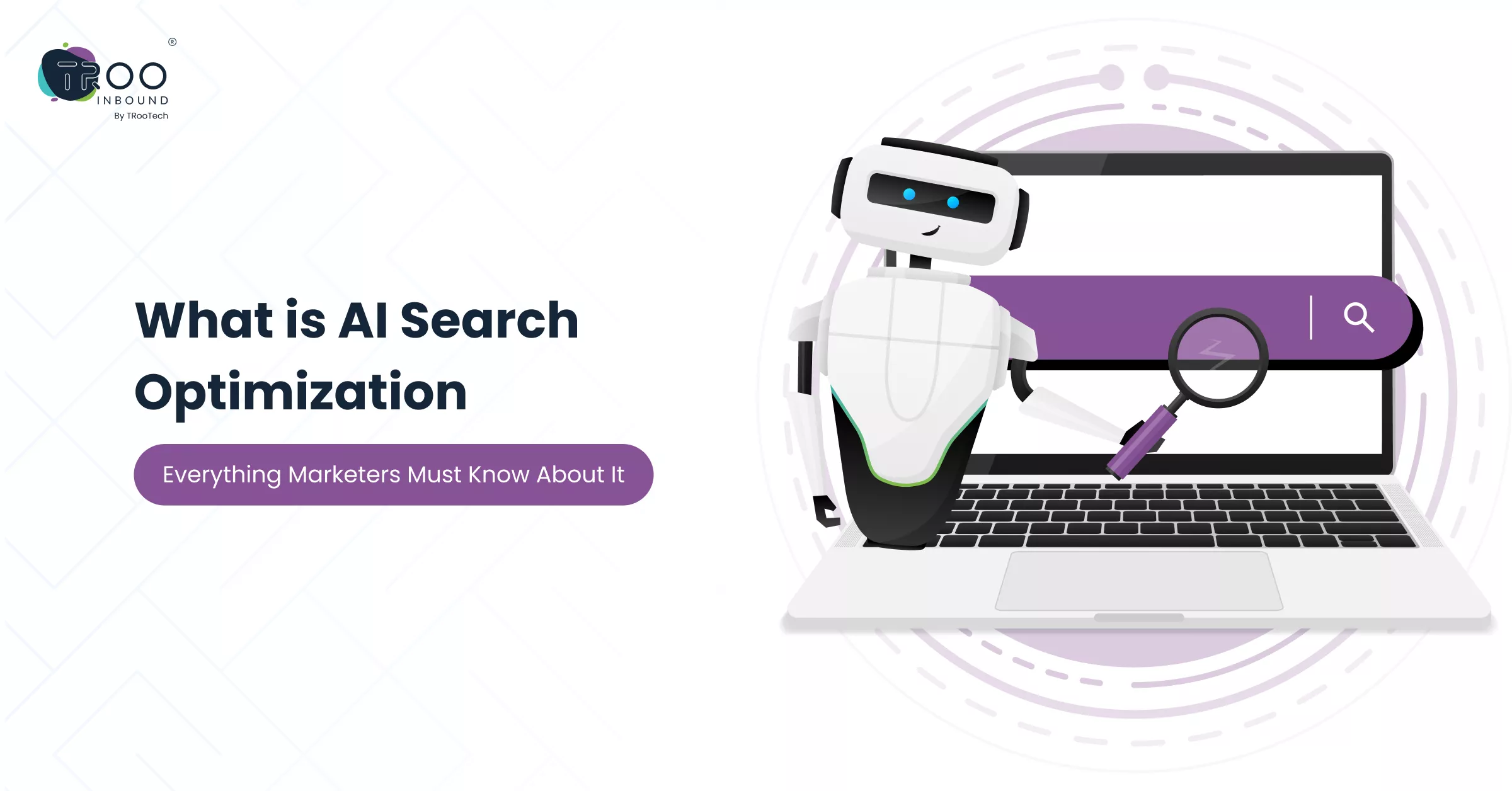


AI Search Optimization is a set of techniques that SEO professionals implement to make your content discoverable, understandable, and usable by LLMs and AI search engines.
Practicing search optimization for AI is becoming unavoidable because buyers today have chosen alternatives to Google, such as ChatGPT, Perplexity, and Gemini. And that’s because users aren’t required to find the perfect link, click on it and then search for their answer; instead, these systems generate answers, summarize insights, and reference sources on their own.
And to make AI tools catch your content is a whole new thing that marketers need to work on, in addition to traditional SEO. It’s about making your content the source that AI trusts and cites.
Let’s breakdown everything you should know as a performance marketer about AI Search Optimization – from basics to visibility-improving best practices.
Key Differences Between SEO and Search Optimization for AI
Traditional SEO is built around keywords, backlinks, and rankings. While those fundamentals still matter, search optimization for AI operates on a different logic.
AI systems don’t “rank” pages the same way Google does. Instead, they:
- Prioritize clarity, authority, and contextual relevance of the content with what the user asked in a conversational way.
- Interpret intent across multiple signals.
- Synthesize information from several sources.
- Reverts in a conversational way – including answers in paragraphs – rather than just listing blue links
In short,
SEO asks: Which page should rank first?
AI search asks: Which content best answers this question right now?
This is why many brands ranking well on Google still fail to appear in AI-generated answers.
How AI Search Engines Work Differently From Traditional Search

Traditional search engines crawl, index, and rank pages based on specific algorithms. Whereas AI search engines rely heavily on LLMs to interpret queries and generate responses.
When a user types in their query/question, the AI search engine:
- Understand conversational and multi-part questions
- Pull insights from multiple trusted sources
- Summarize information in natural language
- Adapt responses based on follow-up queries
This means, when you write content, don’t write it just for Google crawlers, but also for large language models, because content that’s only designed to “rank” often fails to perform on AI search environments.
Popular LLMs & AI Search Engines Marketers Should Pay Attention To
Users are surfing multiple AI-powered search platforms, so you should actively monitor where your users are searching for information and optimize your content accordingly.
Here are some of the popular LLMs & AI search engines where most users spend their time searching:
- ChatGPT and similar conversational assistants
- Perplexity and Gemini for AI powered search experiences
- Google’s AI Overviews and generative search features
- Enterprise LLMs like LlaMa are used for internal research and procurement
Each platforms present results differently, but shares one thing in common: reliance on high-quality, authoritative, and well-structured content to generate answers for users.
How LLMs & AI Search Engines Decide Which Content to Use
Content that explains concepts thoroughly, answers real questions, and demonstrates expertise is far more likely to be used.
If your brand content is unclear, shallow, or inconsistent, AI systems are unlikely to surface it.
One of the biggest misconceptions marketers have is that AI simply “pulls” random information from the web. In reality, LLMs are highly selective.
When deciding which content to reference, AI search engines evaluate:
- Semantic clarity (how clearly ideas are explained)
- Source credibility and topical authority
- Consistency across related content
- Structural readability (headings, sections, formatting)
This is why brands investing in implementing LLM SEO are gaining early visibility. If you want a deeper breakdown, this guide on LLM SEO best practices offers practical insights into how AI evaluates content at scale.
Structuring Content for AI Search Optimization

LLMs rely heavily on how information is organized to understand and summarize it accurately. That’s why structured content matters more than ever in AI search optimization.
For an easy solution on how to structure content for AI searches, you can:
Write content in a way by keeping in mind that AI needs to “read aloud” and explain it to the end user.
Effective AI search optimized content typically includes:
- Clear H2 and H3 hierarchies
- One primary idea per section
- Concise explanations before expanding into detail
- Natural use of keywords like AI search optimization and search optimization for AI
- Logical progression from basics to advanced insights
If the content has scattered sections, repetitive, or vague information, the model may skip or misinterpret your content.
Creating Conversational and Question-Driven Content for AI Search
AI search engines are built for communicating in a conversational way with end users. People don’t type “AI search optimization tools” anymore, instead they ask, “How do I make my content visible in AI search engines?”
That’s why conversational, question-driven content performs exceptionally well. Try adding the following in your content to make it question-driven and conversational:
- FAQ-style sections
- Natural language subheadings
- Direct answers followed by explanations
- Content that anticipates follow-up questions
This approach is especially effective for platforms like ChatGPT, AI Overview, etc. If your brand is serious about being discoverable in conversational AI, How to Rank on ChatGPT and How to Rank in AI Overview are must-read companions.
Strong Technical Foundations Are a Must Before Implementing Search Optimization for AI
While content quality is critical, technical foundations still matter for AI search optimization. AI systems often rely on clean, accessible web infrastructure to source and interpret content.
Key technical considerations include:
- Fast page load speeds
- Mobile-friendly design
- Clean HTML and semantic markup
- Proper indexing and crawlability
- Strong internal linking relationships
Technical SEO and AI search optimization are not separate disciplines; they are supporters of each other. Without a solid technical base, even the best-written content may never be surfaced by AI search engines.
You can hire SEO experts who can help you build a strong technical and foundational SEO base, and also implement clear AEO for better visibility over AI platforms.
Common AI Search Optimization Mistakes Marketers Should Avoid
As AI search gains momentum, many marketers are making avoidable mistakes:
- Treating AI search optimization the same as SEO – complex keyword games!
- Publishing content without a brief and in-depth knowledge of that topic
- Ignoring entity consistency across pages
- Over-optimizing it for AI tools instead of users
- Relying entirely on AI-generated content without human expertise
AI search engines reward clarity, depth, and trust; content-generation shortcuts rarely work.
Brands that focus on adding genuine expertise and long-term authority in their content consistently outperform those chasing quick wins.
How AI Search Optimization Impacts B2B, SaaS, and Inbound Marketing
For B2B and SaaS companies, AI search optimization has a direct impact on sales pipeline generation. Buyers increasingly use AI tools during early-stage research, vendor comparison, and problem discovery.
If your content doesn’t appear in those AI-driven conversations:
- Your brand may never enter the consideration set
- Competitors become the default “expert.”
- Inbound demand shrinks before it reaches your website
AI search optimization strengthens inbound marketing by ensuring your insights surface where decisions actually begin (in the head), not just where clicks end.
Measuring Success in AI Search Optimization (What to Track Now)
Measuring AI search visibility isn’t as straightforward as tracking keyword rankings, but marketers can still monitor meaningful signals:
- Brand mentions in AI-generated responses. Check manually whether your website is mentioned in the list of sources given at the end of the information generated.
- Referral traffic from AI-powered platforms. You can use tools like Google Analytics for this.
- Growth in branded search queries. Google Search Console can help here.
- Engagement metrics on AI-optimized content. Google Analytics can help here.
- Lead quality influenced by AI discovery; check it using HubSpot CRM, Salesforce.
Over time, AI search optimization becomes less about vanity metrics and more about authority, influence, and demand quality.
Final Thoughts: How Marketers Can Build an AI-First Search Strategy
AI search is changing the way people used to find brands, evaluate solutions, and make decisions.
Now users are making decisions long before they ever visit a website. For marketers, this means brand visibility is no longer defined only by rankings or clicks, but by whether your content is trusted, referenced, and surfaced by AI search engines.
Building an AI search optimization strategy requires a shift toward clearer content structures, deeper topical authority, and a stronger focus on answering real questions in a way both humans and AI can understand.
Brands that start adapting now will shape how they’re represented across AI-driven search experiences, while others risk being invisible in conversations that matter most.
If you’re looking to approach AI search optimization strategically and future-proof your inbound efforts, working with an experienced team like TRooInbound can help you navigate this transition with confidence. Feel free to schedule a meeting to explore how an AI-first search strategy can support your growth goals.