


Revenue growth in 2026 is no longer about hiring more sales reps or pushing harder on outreach. Buyers are already known and informed about your products/services, turning Sales cycles longer and more complex.
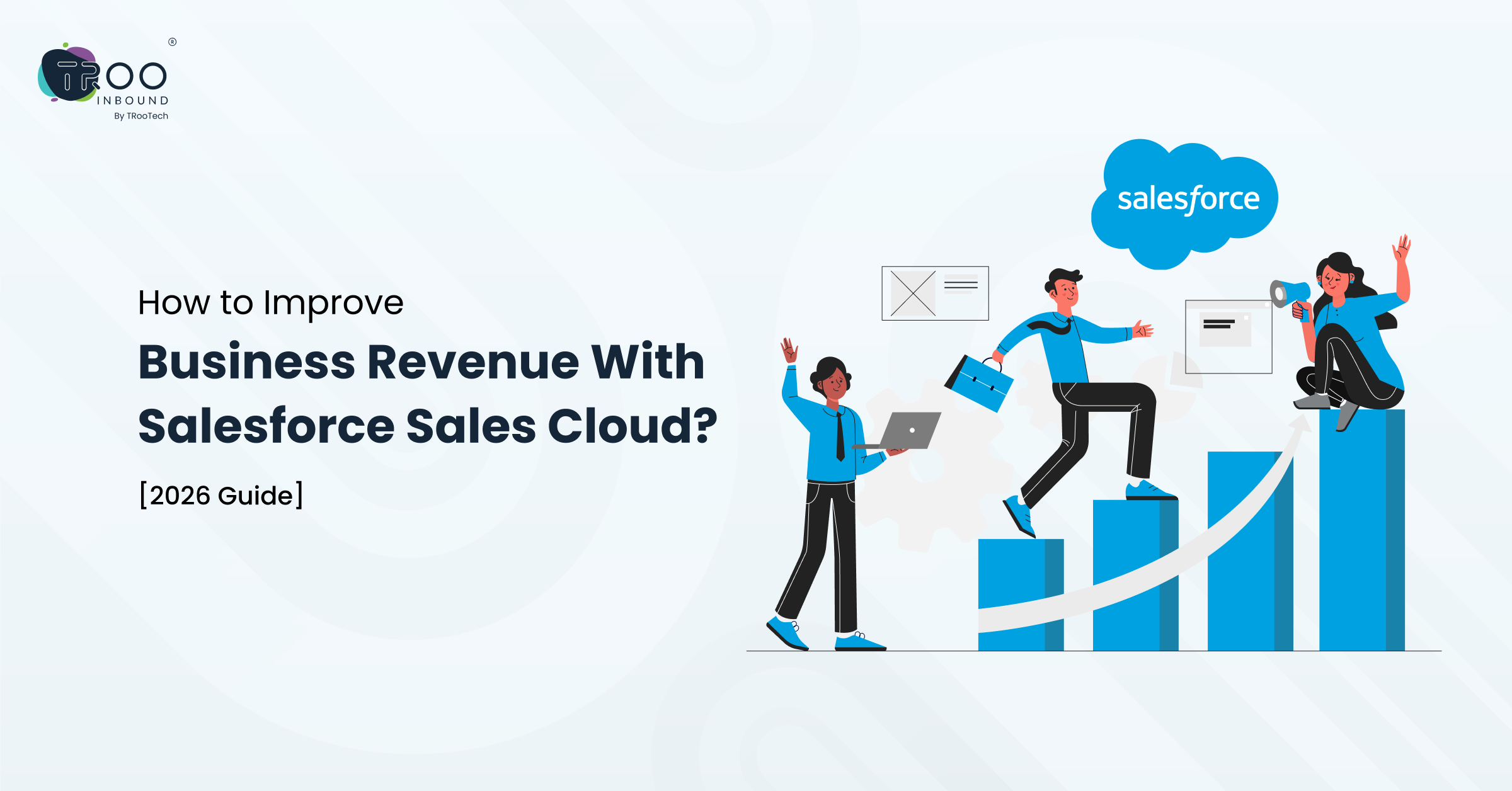
Here’s where enterprises have a chance to stand out and improve business revenue by upgrading to smarter sales systems like Salesforce Sales Cloud.
As of 2026, 4251 verified companies use Salesforce Sales Cloud to empower sales teams and enhance sales processes. That number continues to rise because businesses are looking for predictable revenue, not guesswork.
If you are serious about scaling your sales and revenue to new heights, you can partner with a reliable Salesforce Sales Cloud service provider early, rather than fixing broken implementations later.
But if you are still wondering about how this tool will bring more revenue, this blog is a complete guide for you. Dive in to understand in detail.
What Is Salesforce Sales Cloud and Why It Matters for Modern Businesses

Salesforce Sales Cloud is a CRM platform designed to manage the entire sales lifecycle. It covers lead capture, opportunity management, forecasting, automation, and performance analytics within a single system.
The factors that make Sales Cloud relevant in 2026 aren’t just its feature set; it is how those features connect sales activity to revenue outcomes. It turns every lead interaction, task, and pipeline movement into structured data that leaders can act on.
As modern businesses operate across channels, deals originate from inbound marketing, outbound sales, partners, or referrals. Sales Cloud centralizes everything into a unified pipeline and gives teams a shared view of prospects, deals, and revenue risks. This makes it a must-have cloud-based sales software for modern organizations (startups to large enterprises) looking to keep sales and revenue at the top.
How Salesforce Sales Cloud Directly Impacts Business Revenue Growth

Revenue growth improves when sales teams spend less time managing tools and more time closing deals. Salesforce Sales Cloud supports this shift by removing friction from automating daily, manual sales operations and replacing assumptions with data.
1. Salesforce Sales Automation
Manual sales work slows teams down. Updating records, setting reminders, and tracking follow-ups cuts time from actual selling efforts. Salesforce sales automation reduces this overhead.
With Salesforce automation, sales reps purely focus on conversations and not administration. Activities like lead assignment, task creation, email logging, and deal stage updates happen automatically.
It also improves consistency across sales reps. Every lead follows the same process. No opportunities fall through the cracks. Over time, this discipline compounds into higher win rates and faster deal velocity.
2. Improving Pipeline Visibility and Forecast Accuracy with Sales Cloud
Revenue forecasting fails when pipeline data is incomplete or outdated. Salesforce Sales Cloud solves this by enforcing structured deal management.
Each opportunity includes required fields, stage definitions, and probability logic. Managers see what is real, what is stalled, and what needs intervention.
Accurate forecasts help leadership make better decisions. Hiring plans, marketing spend, and cash flow projections become more reliable. This operational confidence directly supports sustainable growth.
3. Salesforce Lead Management
Revenue quality starts with lead quality. Salesforce lead management connects lead capture, scoring, routing, and conversion into a single flow.
Leads from websites, ads, events, and integrations enter Sales Cloud automatically. Scoring models prioritize prospects based on intent and fit. High-value leads reach sales teams faster.
This reduces wasted effort and improves conversion rates. Sales teams engage the right prospects at the right time, using the right context.
4. Aligning Sales and Marketing Teams
Misalignment between sales and marketing is a hidden revenue drain. Salesforce Sales Cloud bridges this gap by sharing data across teams.
Marketing sees what happens after a lead converts. Sales understands lead source, campaign context, and engagement history. Both teams measure success using shared revenue metrics.
This alignment improves pipeline quality and shortens feedback loops. Marketing adjusts campaigns based on real sales outcomes, not assumptions
5. Using AI and Predictive Insights to Close More Deals
AI in Sales Cloud supports better decision-making, not guesswork. Predictive insights highlight deals at risk, recommend next actions, and surface patterns across closed-won opportunities.
Sales leaders identify what works and replicate it. Reps receive guidance based on data, not instinct. Over time, this improves consistency across teams and regions.
AI does not replace sales judgment; it sharpens it. That clarity translates directly into higher close rates.
Once you implement Salesforce Sales Cloud, these 5 features help you improve your sales and marketing, ultimately enhancing revenue growth.
Sales Cloud Implementation: Key Considerations for Maximum ROI
Accurate Sales Cloud implementation determines whether the platform becomes a revenue driver or a reporting burden. Here are three considerations for maximizing the ROI (Return On Investment) of Sales Cloud:
- Successful implementations start with process clarity. Sales stages, qualification criteria, and handoffs must reflect how the business actually sells.
- Customization should support adoption, not complicate it. Over-engineering dashboards and fields slows teams down. Simplicity improves usage and data quality.
- Integrations also matter. Sales Cloud works best when connected to marketing automation, customer support, and finance systems.
When these points are taken care of at the time of implementation, it creates a true revenue ecosystem rather than another siloed software lying in your tech stack.
Common Revenue Roadblocks Solved by Salesforce Sales Cloud

Many revenue problems are symptoms of poor visibility and inconsistent execution.
Sales Cloud addresses common challenges such as:
- Unclear pipelines
- Missed follow-ups
- Inaccurate forecasts
- Low rep productivity
to keep the roadblocks away from your growth ladder.
It also reduces dependency on individual sales representatives. Knowledge becomes system-driven, not person-dependent. This lowers risk as teams scale or change.
Best Practices to Scale Revenue Faster with Salesforce Sales Cloud
Scaling revenue with Salesforce Sales Cloud requires its features and also consistent use of the platform.
Teams that scale effectively through Sales Cloud tend to follow a few proven practices:
- Standardize your sales stages early
Define clear entry and exit criteria for each pipeline stage. This ensures opportunities move forward based on real progress, not assumptions.
- Treat Salesforce as the single source of truth
All deal updates, activities, and notes should live inside Sales Cloud. When teams rely on side tools or spreadsheets, visibility breaks down.
- Automate repetitive actions, not decision-making
Use automation for task creation, follow-ups, and lead routing. Keep human judgment for qualification, negotiation, and deal strategy.
- Review pipeline and forecasts on a fixed cadence
Weekly pipeline reviews using Sales Cloud dashboards help managers catch risks early and keep forecasts realistic.
- Continuously refine lead scoring models
Update scoring rules based on closed-won and closed-lost data. This keeps Salesforce lead management aligned with what actually converts.
- Train sales teams as processes evolve
Sales Cloud should grow with your business. Regular enablement ensures new workflows are adopted instead of ignored.
- Align KPIs with revenue outcomes
Track metrics that impact revenue, such as stage conversion rates and sales cycle length, not just activity volume.
When these practices are followed consistently, Salesforce Sales Cloud becomes a predictable, scalable CRM and revenue system that supports growth without adding unwanted complexities.
Why Expert Salesforce Sales Cloud Implementation Makes a Measurable Difference
Salesforce Sales Cloud is powerful, but its impact depends largely on how well it is implemented.
Many organizations invest in the platform expecting immediate results, only to find adoption issues, cluttered pipelines, or unreliable forecasts. These are common problems that arise when the software is misaligned with your actual requirements.
An expert Salesforce Sales Cloud implementation starts with understanding how revenue is actually generated within the business. This is where the right implementation partner makes a measurable difference.
TRooInbound approaches Salesforce Sales Cloud with a revenue-first mindset. We focus on accurate configuration, plus designing well-strategized sales processes that scale.
Beyond the initial setup, TRooInbound helps businesses optimize and evolve their Sales Cloud environment as their go-to-market strategy matures. Whether the goal is improving forecast accuracy, increasing lead conversion, or enabling faster deal velocity, the implementation is continuously refined to support revenue growth.
For organizations looking to turn Salesforce Sales Cloud into a predictable revenue engine rather than a complex CRM, working with an expert Salesforce partner that understands both sales strategy and platform execution is often the difference between adoption and real impact.
Final Thoughts: Building a Future-Ready Revenue Engine with Salesforce Sales Cloud
Revenue growth in 2026 depends on smarter sales systems that support clarity, speed, and accountability. Salesforce Sales Cloud matches that shift, but outcomes depend on how well it is implemented and used.
When sales processes are structured, data is trusted, and teams are aligned, revenue becomes predictable. This predictability allows businesses to scale without chaos.
Salesforce Sales Cloud is not just a CRM. It is a revenue operating system. For organizations willing to invest in doing it right, the returns compound year after year.
Looking to implement Salesforce Sales Cloud without chaos and maximum adoption across your business, our team is just a few clicks away. Schedule a 30-min call at your convenient time and to discuss further on your requirements.