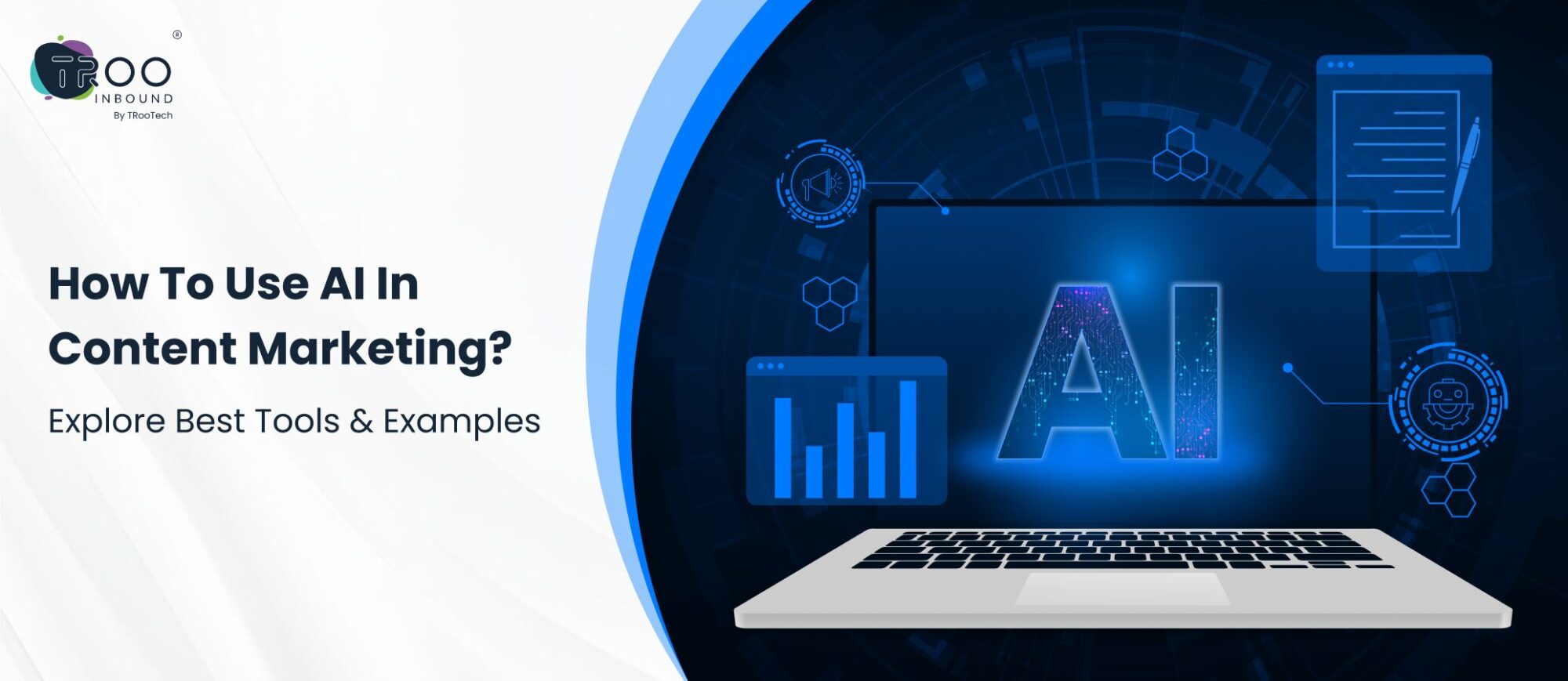
How To Use AI In Content Marketing? Explore Best Tools & Examples

How To Use AI In Content Marketing? Explore Best Tools & Examples

Read Time Image6 min

Everyone’s talking about AI these days. It’s in design, sales, support—and yes, it’s now deeply rooted in marketing. But here’s the thing: not everyone is using it well. Some still rely on old-school methods that worked five years ago. Others are trying to plug in every new tool without a plan. The sweet spot is somewhere in between.

So what’s the real deal with using AI in content marketing? Can it actually help, or is it just another trend with too much hype?

Let’s dig into how AI fits into modern content strategies, which tools are helpful, and what to expect if you’re just getting started.

The Growing Influence of AI in Content Marketing

Content marketing isn’t just writing blog posts and hoping they rank. It’s the whole process—finding ideas, building content, getting it in front of people, and tracking what works. That’s a lot. It used to take entire teams and weeks of planning. Now, AI helps speed things up.

It’s not about replacing people. It’s about removing the repetitive stuff. Need to research 10 blog ideas? AI can help. Want to tweak your content for five platforms? AI can handle the formatting and tone changes. All while you focus on the bigger picture—like telling a story your audience actually cares about.

And it’s not just a theory. The market for AI in content marketing is projected to hit over $100 billion by 2028 (Statista says so). Which is wild, but it also makes sense when you see how much time and energy it saves.

How AI Helps In Each Stage Of Content Marketing

Let’s break it down. Content marketing usually happens in stages. Here’s how AI shows up at each step.

1. Finding Ideas & Doing Research

Coming up with content ideas can be time-consuming. AI tools like ChatGPT, Gemini, or Frase let you ask questions and get a list of blog topics, headlines, or common pain points within seconds. You can even ask them to explain something in plain language so you understand it better before writing.

This isn’t a shortcut to avoid thinking—it’s a way to think faster.

2. Writing and Creating

Now the real work begins. Or used to. Today, tools like Jasper, Copy.ai, and Writesonic generate first drafts. Are they perfect? Nope. But they’re a solid starting point. You can get a rough version of a blog post, social caption, or even a script for a video.

Then, you add your personality and voice and polish it. AI helps with the heavy lifting, and you come in with the creative finish.

3. Repurposing Content Without Starting Over

You don’t need to write new content for every channel. AI makes content stretch further. HubSpot’s Content Remix is one example—it lets you take a blog and turn it into social posts, videos, reels, podcast scripts, and more.

Got a long post? AI helps you slice it into smaller pieces: a tweet thread, an Instagram caption, or a quote for LinkedIn.

Duplicate content, more expansive reach.

4. Publishing and Distribution

Most AI scheduling tools now help you figure out when and where to post. Tools look at your past data and suggest the best times based on your audience’s activity. Not only that, but you can automate the whole calendar—blogs, emails, tweets—without toggling between tools.

It’s not about scheduling once and forgetting. It’s about using data to publish smarter.

5. Tracking What Works (and What Doesn’t)

You hit publish. Then what?

AI analytics tools now give you more than just views and clicks. They point out what’s underperforming. They flag outdated links or suggest edits based on real-time engagement. Tools like MarketMuse even analyze the web to recommend better topics or angles for your next piece.

That feedback loop is gold.

Real Examples Of How Marketers Are Using AI Right Now

Want to see how it plays out? Here’s how people use AI in real workflows—not just theory.

  • Drafting copy faster: Many teams use Jasper or HubSpot AI Assistant to write intros, CTA lines, or even long-form content when they’re low on time.
  • SEO made simple: Surfer SEO, Clearscope, and Semrush help structure your content, pick the right keywords, and adjust readability.
  • Email personalisation: Smart content blocks in HubSpot tailor messages based on who’s opening the email and how they’ve interacted with you before.
  • Chatbots for lead handling: AI bots like Drift or Intercom guide visitors to helpful resources, answer questions, or book calls.
  • Repurposing gold: A great blog turns into short-form content across 4–5 platforms. Tools like Content Remix do this on autopilot.
  • Planning what to write next: MarketMuse uses AI to recommend topics based on competitor gaps and trending themes.

What Benefits Do You Gain by Using AI in Content Marketing

Let’s be honest—most marketing teams are stretched. AI doesn’t just help. It changes the game. Here’s what you get:

  • Faster turnaround – You go from idea to draft in less time
  • More brilliant insights – See what your audience cares about through real behaviour, not guesses
  • More reach – Repurpose content easily for different formats
  • Tone consistency – AI helps keep your message aligned across blog posts, emails, and social media
  • Saved hours (and budget) – Spend less time on tasks that don’t need a human touch.

This doesn’t mean “do more with less” in a toxic productivity way. It means focus on better work, not just more work.

Things You Should Watch Out For

AI isn’t perfect. And there’s no shame in admitting that. A few things might cause friction:

  • Sometimes the writing feels robotic
  • It may miss emotional tone or nuance
  • Privacy is tricky—some tools collect more data than you’d expect
  • Algorithms don’t always understand sarcasm, context, or slang
  • Integrating new tools into your old systems can be messy

The trick? Keep a human in the loop. Use AI for support, not to take over.

What’s Next for AI in Content Marketing?

We’re just scratching the surface. In the future, AI won’t just help write or plan—it’ll learn your tone, respond to real-time behaviour, and shift content based on who’s looking at it.

Expect more voice content, adaptive visuals, and maybe even AI-generated interactive pieces. The line between content and experience will blur.

But creativity won’t go out of style. No matter how good the tools get, your brand still needs fundamental ideas, unique angles, and an emotional connection.

AI can help—but the heart still wins.

Final Verdict

AI isn’t here to replace content marketers. It’s here to support them. It is to make space for better thinking, not just faster output. This will let you spend more time on ideas and less on formatting, posting, or sorting data.

If you’re not sure where to start, pick one task: Automate research. Use AI to schedule posts. Try writing a rough draft with a tool and refining it yourself.

Experiment. Adjust. Learn as you go. That’s how you’ll get the most out of it.

Share:
Knowledge Base

Related Blogs

Dive into other interesting, well-researched, and nicely structured blog posts

Time ForTime for cta a cta

Contact Us

Get A Quick Quote

We will strategize our execution based on your requirement