
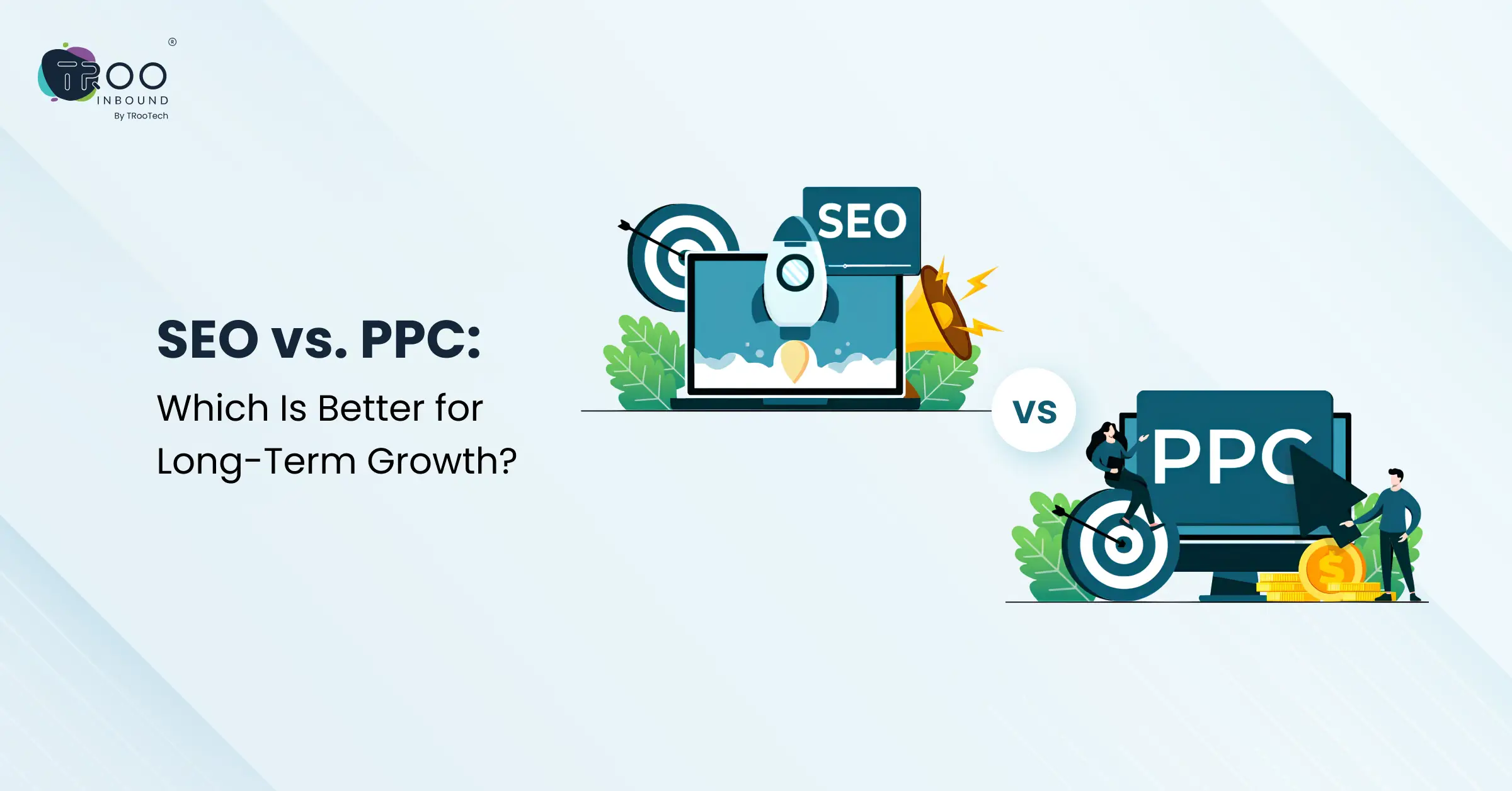


SEO (Search Engine Optimization) brings organic leads to your website over time, while PPC (pay-per-click) campaigns reach out to potential customers or clients directly via short-term targeted campaigns. But for effective digital marketing, a thoughtful combination of these two powerful tools is essential.
However, let’s understand why marketers still debate SEO vs PPC, what the actual roles of each are, when to use which, and more.
Why the SEO vs PPC Debate Still Exists in 2026
Even in 2026, marketers continue to debate SEO vs PPC because both channels promise growth, but they operate on completely different timelines, investment models, and performance expectations.
SEO is often seen as a long-term, compounding asset. It focuses on building authority, credibility, and consistent organic traffic through optimized content, technical health, and high-quality backlinks.
On the other hand, PPC delivers instant visibility. The moment you launch a campaign, your brand can appear at the top of search results, social feeds, or display networks.
The debate exists because businesses typically ask one key question:
“Where should we invest if we want predictable, scalable growth?”
The answer is not always straightforward. It depends on your business model, sales cycle, budget flexibility, competition level, and growth goals. To decide wisely, you need to understand how each channel truly works in 2026.
What Is SEO and How Has It Evolved After AI?
Search Engine Optimization in 2026 is no longer just about keywords and backlinks. It is about:
- Search intent alignment
- AI-driven search experiences
- E-E-A-T (Experience, Expertise, Authority, Trust)
- Technical performance and Core Web Vitals
- Structured data and semantic search
- User engagement signals
Modern SEO focuses on solving user problems better than competitors. Google and other search engines now prioritize content that demonstrates real expertise and delivers measurable value.
Key Components of SEO
1. Technical SEO: Site speed, mobile optimization, structured data, crawlability, and index management.
2. On-Page SEO: Intent-driven content, internal linking, keyword clusters, topic authority.
3. Off-Page SEO: Authority building through high-quality backlinks and digital PR.
4. Content Strategy: Thought leadership blogs, landing pages, pillar content, and conversion-focused assets.
If your goal is sustainable traffic that does not stop when your budget pauses, investing in professional SEO services becomes critical. And for businesses looking for strategic and cost-effective execution, partnering with a trusted SEO company in India can help scale efforts while maintaining ROI efficiency.
What Is PPC in 2026 and How It Works
PPC, or pay-per-click advertising, allows businesses to bid on keywords and show ads to targeted audiences across search engines, social platforms, and display networks.
In 2026, PPC is more automated and AI-powered than ever before. Smart bidding, predictive targeting, and machine learning have transformed how campaigns are optimized.
PPC Channels That Matter in 2026
- Google Search Ads
- Google Performance Max
- LinkedIn Ads for B2B
- Meta Ads
- YouTube Ads
- Retargeting campaigns
Plus, the biggest advantage of PPC is speedy reach to your audience. With PPC, you can:
- Launch a campaign today
- Generate traffic tomorrow
- Test messaging within a week
- Optimize based on live data
For businesses looking to drive immediate results, structured PPC management services ensure that ad spend translates into measurable conversions. And if you need focused campaign execution, you can also hire PPC specialists to manage bidding, creatives, audience segmentation, and performance optimization.
Now, let’s understand the core factors that differentiate both worlds: SEO and PPC.
SEO vs PPC: Core Differences That Matter for Long-Term Growth
Here’s a tabular breakdown of practical differences between SEO and PPC for easy understanding:
| Key Factors | SEO | PPC |
|---|---|---|
| Time to See Results | Takes 3–6 months to see traction, 6–12 months for significant growth. | Immediate visibility once campaigns go live. |
| Cost Structure | Upfront investment in strategy, content, and optimization. Long-term cost per acquisition decreases over time. | Ongoing cost per click. Traffic stops when you stop paying. |
| Scalability | Scales through content expansion, authority building, and improved rankings. | Scales through increased budget and improved targeting. |
| Trust & Credibility | Users often trust organic results more than ads. High-ranking organic listings build authority and brand credibility. | PPC provides visibility, but SEO builds brand trust. |
| Control & Predictability | SEO relies on algorithm updates and the competitive landscape. | PPC offers tighter control over targeting, messaging, and budget. |
When SEO Is Better for Long-Term Growth

SEO is the better choice when:
- You want sustainable lead generation.
- You operate in a high-competition industry.
- Your sales cycle is longer.
- Brand authority matters.
- You want predictable inbound traffic.
For example, B2B SaaS, manufacturing, consulting, and enterprise service companies benefit heavily from long-term SEO strategies.
In such cases, it often makes sense to hire SEO experts who understand technical optimization, content architecture, and conversion-focused SEO.
SEO becomes a digital asset. Every blog, landing page, and ranking keyword contributes to growth even years later.
When PPC Is the Smarter Move

PPC works best when:
- You are launching a new product.
- You need immediate traffic.
- You want to test new markets.
- You are running limited-time offers.
- You want to retarget warm audiences.
For startups and fast-scaling businesses, PPC helps validate messaging quickly. Instead of waiting months to see if a keyword converts organically, you can test it through paid ads within days.
In competitive industries where ranking organically might take years, PPC can bridge the gap.
The Hidden Risks of Relying on Only One Channel
Today, short-term and long-term reach both matter. Brands want to stay on their customer’s mind all the time. And here, choosing any one strategy from SEO or PPC can create less visibility over time.
If You Rely Only on SEO
- Algorithm updates can impact rankings.
- Results take time.
- Competitive industries require strong authority.
If You Rely Only on PPC
- Costs increase over time.
- Budget dependency limits growth.
- Ad fatigue reduces performance.
- Traffic stops instantly if campaigns pause.
Long-term growth in 2026 is about diversification.
The Smart Strategy: Integrating SEO and PPC
Instead of choosing one, high-growth companies integrate both. Here’s how:
1. Use PPC for Data, SEO for Scale
Run PPC campaigns to identify high-converting keywords. Then build SEO content around those keywords for long-term ranking.
2. Dominate SERPs with Both
Appearing in both paid and organic results increases click-through rates and brand recall.
3. Retarget Organic Traffic
Use PPC retargeting ads to re-engage users who visited through organic search but did not convert.
4. Test Landing Pages with PPC
Before investing in long-term SEO content, validate landing page messaging through paid campaigns.
5. Balance Budget Allocation
Early-stage companies: 60% PPC, 40% SEO
Growth-stage companies: 50% SEO, 50% PPC
Established brands: 70% SEO, 30% PPC
These ratios vary, but the idea is strategic balance. You can share your requirements with your SEO & PPC partner to help you form a strategized balance on when to use PPC and when to use SEO.
SEO vs PPC ROI in 2026
In competitive industries, PPC cost per click continues to rise. AI bidding systems have increased efficiency, but they have also intensified competition.
SEO, on the other hand, requires patience but often delivers exponential ROI over time.
Example scenario:
- Month 1: PPC generates 200 leads, SEO generates 20.
- Month 12: PPC still generates 200 leads unless the budget increases.
- Month 12: SEO now generates 500 leads without a proportional budget increase.
This compounding effect makes SEO essential for long-term growth.
However, PPC maintains predictable pipeline volume, which is critical for revenue stability. The real ROI comes from combining both.
What Should Businesses Focus on in 2026?
Search behavior of users is evolving due to:
- AI-powered search summaries
- Voice search
- Zero-click results
- Personalized search experiences
And to win in this environment, businesses must:
- Build strong content authority.
- Invest in technical optimization.
- Use paid media strategically.
- Optimize for user intent.
- Track revenue, not just traffic.
Marketing teams that align SEO and PPC with revenue goals outperform those that treat them as separate silos.
How to Decide Which One To Choose: SEO or PPC?
Ask yourself:
- Do we need immediate leads?
- Can we sustain paid budgets long term?
- Are we building brand authority?
- Is our sales cycle short or long?
- Are we testing new markets?
If short-term revenue is critical, start with PPC; if sustainable growth is your goal, invest in SEO; if you want predictable, scalable growth, integrate both.
Final Verdict: Which Is Better for Long-Term Growth?
If the question is strictly about long-term growth in 2026, SEO has the edge because it builds a lasting digital asset.
However, businesses that rely only on SEO risk slower growth in competitive markets. Businesses that rely only on PPC risk rising costs and dependency on ad spend. The real competitive advantage comes from a strategic blend of both.
At TRooInbound, we help businesses design growth strategies that align organic visibility with paid performance. Whether you need end-to-end SEO services, expert guidance from a trusted SEO company in India, want to hire SEO expert for focused execution, or scale campaigns through structured PPC management services and hire PPC specialists, the goal remains the same: sustainable, revenue-driven growth.
Because in 2026, it is not SEO vs PPC. It is SEO and PPC, aligned with business outcomes.