
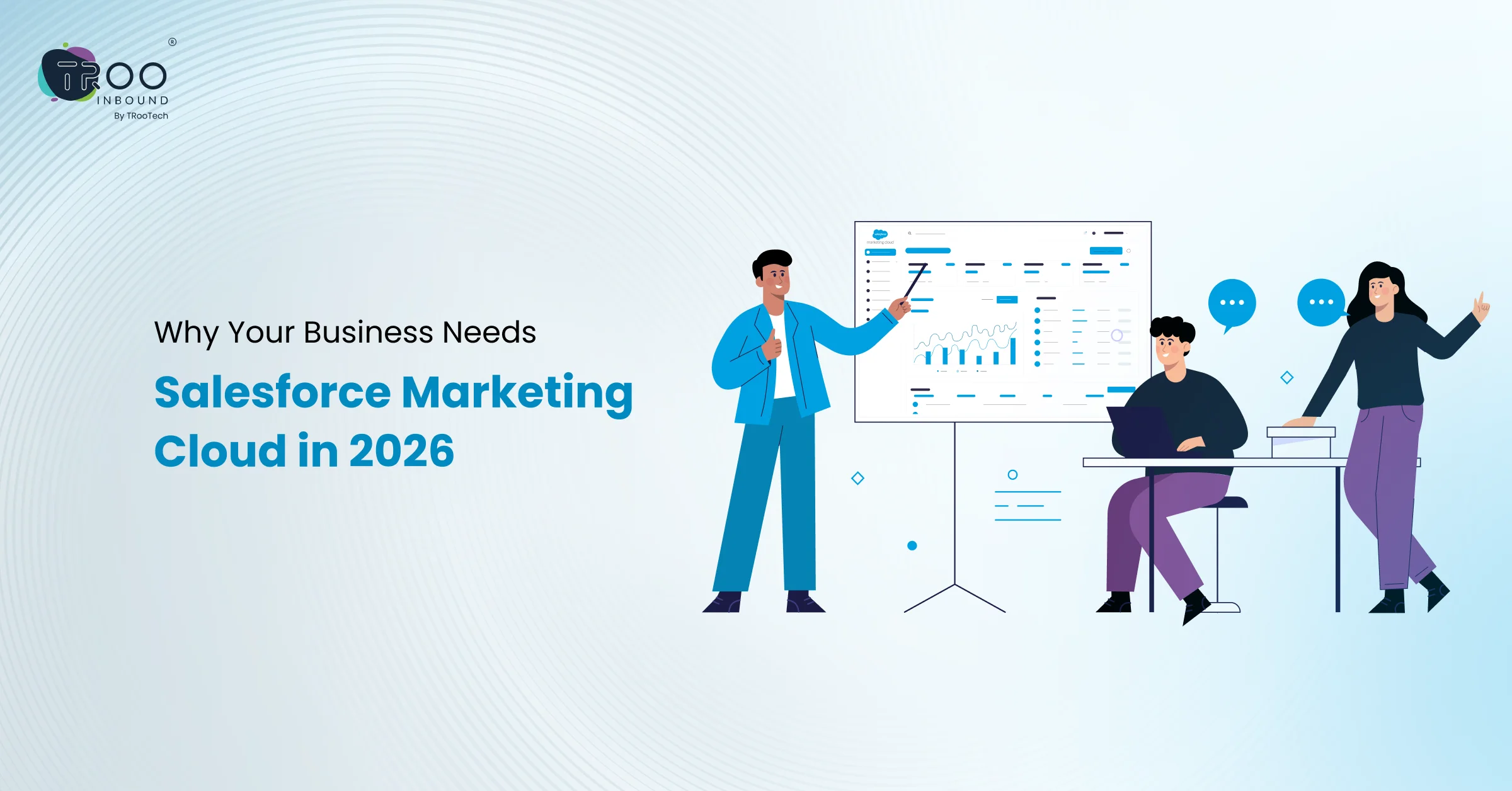


Why Your Business Needs Salesforce Marketing Cloud in 2026. Buyers expect personalized communication at every touchpoint. They want brands to know who they are, what they care about, and when to reach them. Most businesses still struggle to deliver this at scale.
If your marketing team juggles disconnected tools, data silos, and manual workarounds, you are falling behind in customers’ expectations. This is where Salesforce Marketing Cloud gives businesses the infrastructure to move from reactive campaigns to proactive, data-driven customer engagement.
If you are a business owner, CMO, or digital marketing leader planning for long-term growth, this guide will help you understand why Salesforce Marketing Cloud is not optional in 2026.
What Is Salesforce Marketing Cloud?
Salesforce Marketing Cloud (SFMC) is an enterprise-level, AI-driven digital marketing platform that helps businesses create personalized, data-driven customer journeys across multiple channels, like email, social media, mobile, and web.
It connects to your CRM data, so your marketing reflects actual customer behavior. A customer who just purchased should not receive a sales pitch for the same product. Someone who browses a service page three times probably needs a nudge. Marketing Cloud makes those distinctions automatically.
The platform is not a single tool. It is a suite of products, each designed for a specific job. Together, they create a unified system for attracting, engaging, and retaining customers.
The Core Products Inside Salesforce Marketing Cloud
Salesforce Marketing Cloud consists of two sets of products: Studios and Builders.
- Studios for managing content for a specific marketing channel. For example: Email Studio, Mobile Studio, Social Studio, Advertising Studio, Web Studio, and Automation Studio.
- Builders for managing data and campaign automation. For example: Journey Builder, Contact Builder, Content Builder, BrandBuilder, Analytics Builder, Standard Reports, and more.
- New additions to Marketing Cloud: Marketing Cloud Einstein, Audience Studio (formerly Salesforce DMP), Data Studio, Marketing Cloud Personalization, Google Analytics 360, Distributed Marketing, and Marketing Cloud Intelligence (formerly Datorama).
Why 2026 Demands a Smarter Marketing Infrastructure
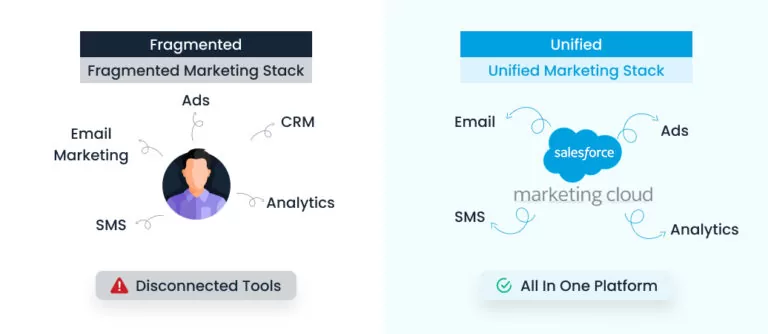
Several forces are reshaping the marketing landscape right now. Ignoring them is not an option.
Third-party cookies are gone. Platforms like Google have phased out the tracking mechanisms that many businesses relied on for years. Companies that built their targeting strategy on third-party data are scrambling.
Omnichannel is no longer optional. A customer might discover you on Instagram, research you via email, and convert on your website. If those experiences feel disconnected, you lose them. Marketing Cloud keeps the experience consistent regardless of where that interaction happens.
It helps you build a first-party data strategy where you own the customer relationship and the insights that come with it. Plus, Marketing Cloud’s Einstein AI predicts what customers want next, which messages will perform best, and when to send them.
Benefits of Using Salesforce Marketing Cloud Here
1. Unified Customer Journeys
Journey Builder allows you to design complete lifecycle journeys.
For example:
- A lead downloads a whitepaper
- They receive a personalized email sequence
- If they click but do not convert, they receive a reminder SMS
- If they engage, sales receives a notification
- If they purchase, onboarding emails begin automatically
All of this happens inside one system. You do not need five tools and multiple integrations. You design once and scale.
2. Advanced Segmentation and Targeting
With Salesforce Marketing Cloud, you can segment audiences based on:
- Demographics
- Purchase history
- Web behavior
- Engagement level
- Predictive scores
This precision improves open rates, click-through rates, and conversions. More importantly, it protects your brand from becoming irrelevant. Mass messaging damages trust while smart segmentation helps build it.
3. Real-Time Analytics and Reporting
Marketing leaders need clarity. Salesforce Marketing Cloud provides detailed performance insights across channels. You can track:
- Engagement trends
- Conversion performance
- Customer lifetime value
- Funnel drop-off points
- Revenue attribution
This allows CMOs to justify marketing investment with real numbers. When marketing becomes measurable, it earns strategic influence at the executive table.
4. Seamless Sales and Marketing Alignment
When marketing and sales operate in silos, revenue suffers.
Salesforce Marketing Cloud connects directly with Salesforce CRM. Marketing activities become visible to sales teams. Sales conversations become visible to marketing teams.
This alignment creates:
- Better lead qualification
- Faster follow-ups
- Higher conversion rates
- Stronger customer relationships
If you want to build a predictable growth engine in 2026, this alignment is critical.
Who Should Invest in Salesforce Marketing Cloud in 2026? Industries That Benefit Most
Salesforce Marketing Cloud works across sectors, but some industries see particularly strong results.
- Retail and ecommerce teams use it to recover abandoned carts, send post-purchase sequences, and drive repeat sales through personalized recommendations. The platform connects purchase history to future messaging so every communication feels relevant.
- Financial services firms use it to onboard new clients, nurture prospects through long sales cycles, and stay compliant with regulatory requirements around communication. Built-in preference management and consent tracking help with this.
- Healthcare organizations use it for patient engagement, appointment reminders, and health education campaigns. HIPAA-compliant configurations make this viable even in regulated environments.
- B2B technology companies use Account Engagement to align marketing with their sales teams, run account-based marketing programs, and score leads before handing them off.
In short, mid to large enterprises, fast-growing B2B companies, companies managing multiple markets, and businesses focused on data-driven decision-making benefit the most from Salesforce Marketing Cloud.
Common Concerns Business Leaders Have While Implementing Marketing Cloud
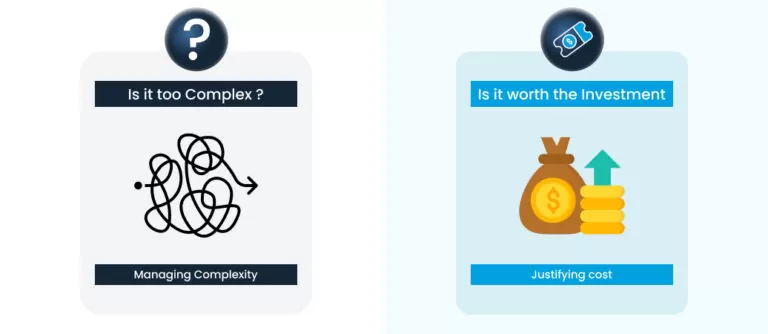
It is fair to have questions before committing to a platform of this scale.
The most common concern is complexity. Marketing Cloud is powerful, which means it has a learning curve. Implementation requires planning, configuration, and often dedicated support. Working with an experienced team makes a meaningful difference. A Salesforce Expert can help you avoid the pitfalls that slow most companies down.
Cost is another concern. Salesforce Marketing Cloud is an investment. But the question is not whether it costs money. The question is whether it costs less than the revenue you lose by not having it. When you calculate the value of higher conversion rates, better retention, and more efficient ad spend, the math usually changes.
Data readiness comes up, too. Many businesses worry that their data is not clean enough or structured well enough to get value from Marketing Cloud. This is a real challenge, but it is also a solvable one. Implementation starts with a data audit, and that process itself often reveals insights that are immediately useful.
How TRooInbound Helps Businesses Get Results with Salesforce Marketing Cloud
Implementing a platform like this correctly requires deep expertise. Most businesses do not have that expertise sitting idle on their team. That is where a specialized partner comes in.
TRooInbound works with businesses to implement, configure, and optimize Salesforce Marketing Cloud. The team handles everything from initial setup and data migration to journey building and ongoing campaign management.
Whether you are just evaluating the platform or already have it in place but are not seeing the results you expected, getting the right support changes the outcome. Explore what’s possible with dedicated Salesforce Marketing Cloud Services built around your business goals.
The difference between a company that uses Marketing Cloud and one that uses it well is significant. If SFMC implementation is done right, it becomes a competitive advantage that compounds over time.
What Good SFMC Implementation Looks Like
A successful Marketing Cloud rollout does not happen by installing software and hoping for the best.
It starts with clarity on business goals. What do you want the platform to achieve? More leads, better retention, higher email conversion, reduced churn? The answer shapes every decision that follows.
Next comes data integration. Your CRM, website, and other tools need to connect with Marketing Cloud so the platform has a complete picture of each customer. This is what makes personalization possible.
Then comes journey design. Your team maps out the key moments in the customer lifecycle and builds the automated sequences that respond to them.
Testing and optimization follow. No campaign is perfect on day one. The platform gives you the data to improve continuously. Open rates, click rates, conversion rates, revenue attribution. You measure, adjust, and improve.
Ongoing management matters too. Marketing Cloud is not a set-it-and-forget-it tool. It requires monitoring, updating, and strategic input.
That’s why many companies choose to work with a reliable Salesforce partner rather than building an in-house team from scratch.
The Bottom Line
Marketing in 2026 demands intelligence, integration, and personalization. It rewards companies that know their customers well and communicate with them in ways that feel personal. Salesforce Marketing Cloud gives you the infrastructure to do exactly that. It connects data, automates journeys, and delivers personalized experiences at scale.
It is not just a tool for enterprise companies anymore. Businesses of all sizes use it to close the gap between data and action, between marketing and sales, between a brand and its customers.
If you want to compete on customer experience, you need a platform that can deliver it. Salesforce Marketing Cloud is built for that. The only question is how quickly you want to get started.