


Everyone is optimizing content for AI visibility by following certain best practices, like more FAQs, accurate schema, E-E-A-T content, etc. But there is a gap between showing up in AI answers and actually getting cited. That gap is where most brands are losing traffic.
Citation in AI tools like ChatGPT, Perplexity, etc., means that AI is saying this source is credible enough to attach my answer to. That is a completely different standard than ranking on search engines, and requires something more than most AEO guides suggest.
The brands earning consistent citations across ChatGPT-like tools are producing content that AI engines can verify, extract, and display with confidence. And for this, they have to follow a specific structure and signals. Once you understand how citations in AEO work, the path to getting cited becomes a lot easier.
This blog gets into all of it. Let’s dive in.
What Are Citations in AEO and Why Do They Matter Now?

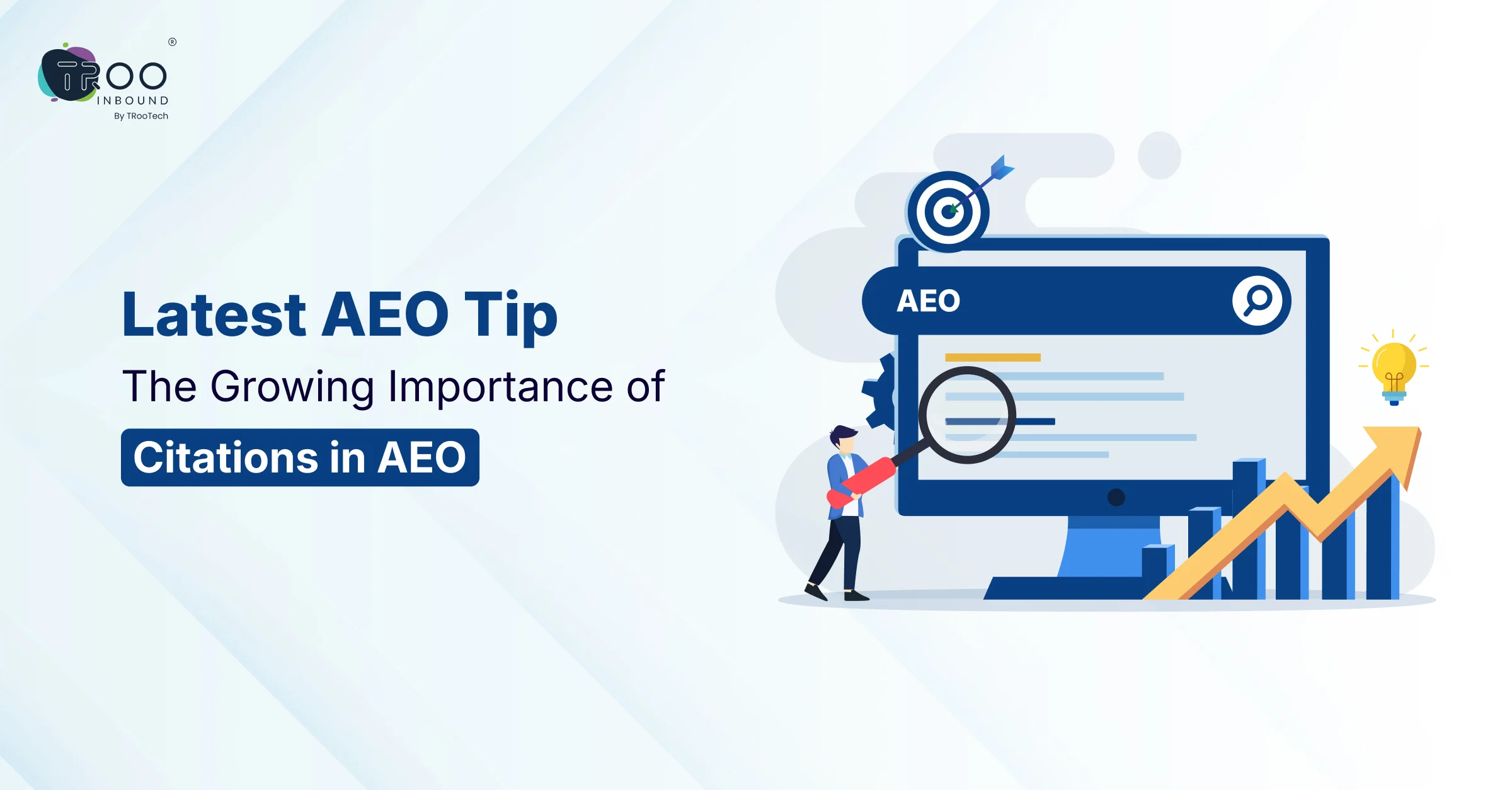
An AEO citation is when AI search tools like Claude, ChatGPT, Gemini, AI Overviews, etc., directly mention or credit your brand, website, or content as the verified source that helped the tool generate an answer for a user’s question.
Citations might show up as a linked URL below the AI response, or as a brand mention within the generated content, or as a ‘Sources’ card that users can click to expand and read more.
In short, in SEO, it’s the top-ranking links from the list of blue links, and in AEO, it’s the citations that will drive traffic to your website. But getting cited on AI means much more than just ranking on SERPs.
Getting your content cited on AI matters today because, as per Semrush’s research, an average AI search visitor is 4.4 times as valuable as the average visit from traditional organic search. It’s because they aren’t casual scrawlers, they are intended buyers who already have pre-qualified AI’s answer, and your citation is what brought them to your site.
So, now the question is: how to become one of those cited sources in the AI search tools.
5 Ways How AI Engines Actually Decide What to Cite
There’s a myth that most marketers tend to believe: ‘AI engines simply pull from the highest-ranked pages on Google.’ But the reality is more nuanced, and understanding it gives you a significant advantage.
Here are the five key signals that influence AI citation selection of your content:
- The FAQ schema quality: Pages that implement the structured FAQ schema give AI engines a ready-made map of questions and answers. The engine knows what your content is about.
- Answer-first formatting: If your key insight is buried in paragraph eleven, the AI may never extract it. So, put your answer at the top.
- Statistical density: AI engines prefer content that backs claims with data. A sentence that reads “According to HubSpot’s 2025 State of Marketing Report, 63% of marketers now prioritize AI visibility” is infinitely more citable than “Many marketers are focusing on AI.”
- Domain authority and traffic signals: High-traffic sites earn three times more citations than low-traffic ones. This is why traditional SEO and AEO are not competing strategies. They compound each other.
- Crawlability: If GPTBot, PerplexityBot, or ClaudeBot are blocked in your robots.txt file, you are invisible to those engines regardless of how strong your content is. Checking your robots.txt takes five minutes and could be the single most impactful fix you make this month.
How to Structure Content To Get Cited In AI Tools

1. Lead with the direct answer
Start every content with a concise, factual response to the core question the page is built around. You can go deeper after, but put the answer first; readers and AI engines both benefit from this.
2. Frame your headings as questions
H2s and H3s structured as genuine questions your audience is already asking make it easier for AI to match your content to fan-out sub-queries.
3. Implement FAQPage schema
4. Back every claim with a named source
5. Include expert quotes with full attribution
A quote from a named expert, along with their title and organization, gives AI engines an extractable piece of authoritative content. It also signals the experience and expertise components of E-E-A-T.
6. Keep content fresh on a quarterly basis
7. Write in clear, neutral language
Pro tip:
Measure your current AEO readiness with HubSpot’s AEO Grader before making any changes in your content.
Citation Behavior Also Changes Depending On Different Platforms
Each platform has distinct behavior, and only 11% of citations overlap across major platforms. That means monitoring one engine captures less than a quarter of your actual AI visibility.
ChatGPT
Claude and Gemini
Perplexity
Google AI Overviews
Google AI Overviews pull from Google’s existing index, which means your traditional SEO foundation directly feeds your citation potential here. Structured data, schema markup, and strong on-page signals are particularly important for this platform. There is also a 76% URL overlap between AI Overviews and Google’s top 10 results, which is significantly higher than any other AI engine.
Pairing a solid AEO citation strategy with the right LLM SEO best practices gives you coverage across all platforms rather than concentrating on just one.
How to Track If Your Content is Being Cited on AI tools?
There are multiple ways you can track whether your content is being cited on AI tools, such as:
- By using Google Analytics 4, filter your referral traffic by source to identify sessions arriving from perplexity.ai, chatgpt.com, and related AI platforms. This gives you a baseline of how much traffic citations are already generating for your brand.
- Manually query your most important industry questions across ChatGPT, Perplexity, Gemini, and Google AI Overviews on a regular basis. Document which sources are being cited and where you appear or do not appear. Look for patterns in the content that is consistently cited and reverse-engineer what makes it extractable.
- Use Perplexity’s visitor logs to your advantage. The PerplexityBot crawler leaves traces in your server logs. The pages it visits most frequently are the pages with the highest citation potential. Prioritize those pages for optimization.
For a more structured visibility audit, tools like HubSpot’s AEO Grader give you a measurable score for your brand’s AI presence. Running this audit before and after content updates helps you connect specific changes to citation outcomes.
Your Readiness Checklist for Citations in AEO
Before you close this tab, run through this checklist against your most important pages:
- GPTBot, PerplexityBot, ClaudeBot, and OAI-SearchBot are allowed in your robots.txt
- Your site is submitted to Bing Webmaster Tools with a verified sitemap
- The FAQ page schema is live on your key content pages
- Each page opens with a direct, concise answer in the first paragraph
- All statistics cite a named, credible source within the body copy
- Content on priority pages has been updated within the last 90 days
- Your brand appears consistently across third-party sources, review sites, and community platforms
- Structured comparison tables are used where your content covers multiple options
- Author bylines include credentials, title, and relevant experience
- H2 and H3 headings are framed as questions your audience is actively asking
If you can check every item on this list, your content is in strong shape to earn citations. If several items remain unchecked, those gaps represent exactly why competitors may be appearing in AI answers where you are not.
Citations in AEO Are the New Metric That Matters in AI SEO
Rankings will not disappear overnight. But the metric that increasingly determines whether a buyer encounters your brand at the right moment is no longer your position in a list of links. It is whether an AI engine trusts your content enough to cite it.
The brands building citation authority right now are setting themselves apart in a way that will be difficult for late movers to replicate. The technical steps are clear. The content principles are straightforward. The window to build a meaningful head start is still open.
If you want to understand exactly where your brand stands in AI search visibility today, hire SEO experts who know SEO, AEO, and GEO inside out and can walk you through a full audit and identify the highest-impact opportunities for your specific website and industry.
Get in touch with the TRooInbound team today and take the first step toward making your brand the one that gets cited.
FAQs
Read Popular Questions
What are citations in AEO, and why do they matter?
How do AI engines decide which websites to cite?
AI engines consider factors such as statistical density, domain authority, traffic signals, FAQ schema quality, answer-first formatting, and crawlability. Content that is easy to verify, extract, and understand has a stronger chance of being selected as a citation.
How can I structure my content to increase AI citations?
Lead with a direct answer to the main question, use question-based H2s and H3s, implement FAQPage schema, support claims with named sources, include expert quotes with attribution, keep content updated, and use clear, neutral language.
Does FAQ schema help improve AI citation chances?
Yes. FAQPage schema provides AI engines with a structured, machine-readable list of questions and answers, making it easier to understand and extract relevant information from a page.
How does E-E-A-T affect citations in AI search?
E-E-A-T helps demonstrate the experience, expertise, authority, and trustworthiness of your content. Named expert quotes, credible author bylines, relevant experience, and first-hand expertise can strengthen the authority signals AI platforms use when evaluating content.
How can I track whether AI tools are citing my content?
You can monitor AI referral traffic through Google Analytics 4, manually check important queries across ChatGPT, Perplexity, Gemini, and Google AI Overviews, review PerplexityBot activity in server logs, and use tools such as HubSpot’s AEO Grader for a more structured visibility audit.
Do AI citation factors differ across ChatGPT, Perplexity, Gemini, and Google AI Overviews?
Yes. Different AI platforms use different signals. ChatGPT considers domain authority and publication consistency; Claude and Gemini place significant weight on E-E-A-T; Perplexity emphasises freshness and verifiable facts, while Google AI Overviews relies heavily on its existing search index and traditional SEO signals.