
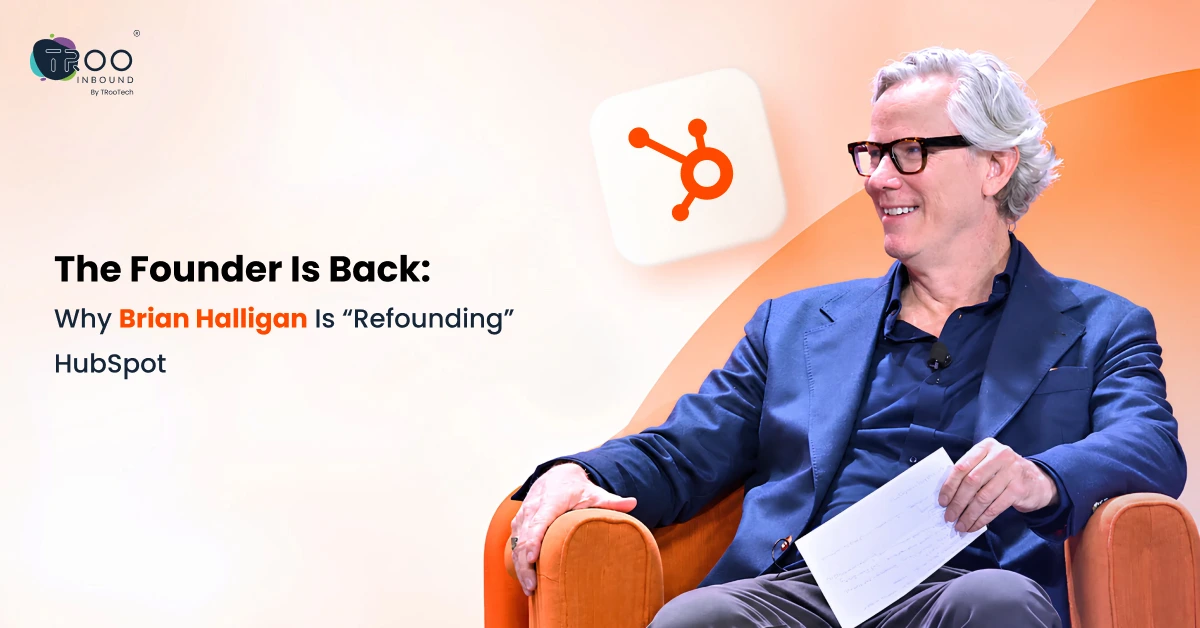
Brian Halligan is CEO of HubSpot again. Here is what happened, why it happened now, and what it means for you as a HubSpot user.
The news
On November 12, 2026, HubSpot named its co-founder Brian Halligan as CEO once more. He replaces Yamini Rangan. She stepped down as CEO and left the Board on the same day. Rangan stays with the company until December 1 to help with the handover.
The change took effect right away. HubSpot shared the news in its official press release. And Halligan made one thing clear. He doesn’t see this as a normal CEO swap. He calls it a “refounding.”
His own words on X
Brian Halligan broke the news himself on X. In his post, he wrote that “@dharmesh and I are completely re-founding the company.” He called it day one. He also gave HubSpot a new label: the Customer Harness Company. And he promised to explain why he came back, and what he plans to do, in the days that follow.

His co-founder and CTO, Dharmesh Shah, backed the move on LinkedIn. His message was simple. It’s time to rethink what HubSpot can be in the age of AI.
Where it all started
Brian Halligan and Dharmesh Shah met at MIT. They co-founded HubSpot in 2005 with one big idea: inbound marketing. Instead of chasing buyers with cold calls and pushy ads, you pull them in with useful content. That idea built a whole industry.
Growth milestones
HubSpot went public on the New York Stock Exchange in 2014 under the ticker HUBS. Halligan ran the company as CEO for 16 years. By 2021, HubSpot was worth more than $30 billion. That same year, he stepped aside and handed the top job to Yamini Rangan. He never really left, though. He stayed on the Board the whole time.
The Yamini Rangan era
Rangan led HubSpot from September 2021. Her numbers are strong:
- Customers grew from 135,000 to more than 311,000.
- Revenue grew from $1.3 billion in 2021 to an expected $3.7 billion in 2026.
- HubSpot moved upmarket and built AI into its products.
In her goodbye note, Yamini Rangan said Brian Halligan knows the company better than anyone.
Why now?
Growth was not the problem. Pressure was. 2026 has been a rocky year for HubSpot:
- The stock fell about 47% year over year.
- In October, HubSpot cut about 660 jobs. That’s roughly 7% of its staff.
- In July, a plan to share customer enrichment data on an opt-out basis drew strong backlash. HubSpot reversed it within days.
Brian Halligan has been blunt about it. He told Bloomberg that the latest results weren’t great. He also said the company may have chased short-term financial targets instead of great products. His plan is to overhaul product, culture, and the way HubSpot sells. And he said he wants to rebuild HubSpot, not watch it shrink or get bought out by private equity.
Chapter 3: the “customer relationship harness”
Brian Halligan sees HubSpot’s story in three chapters:
- Chapter one: Inbound marketing. HubSpot created the category.
- Chapter two: The CRM platform. Hundreds of thousands of businesses use it every day.
- Chapter three: The customer relationship harness, which he says will help millions grow better.
In plain terms, chapter three is about AI agents. These agents will do more of the work inside your CRM. HubSpot already laid some groundwork this year with Agent Hub, Breeze Assistant, and CRM connectors for ChatGPT and Claude.
But here’s the catch. HubSpot hasn’t said what the “harness” will include yet. Shah has also mentioned a push toward a “Headless HubSpot.” He hasn’t shared features or dates for either idea. So for now, it’s a direction, not a product.
A new CFO too
The CEO isn’t the only change at the top. Karen Burgess is coming over from Adobe, where she led finance for its Creativity & Productivity business. She joins HubSpot on November 30, 2026, and becomes CFO on February 11, 2027. She replaces Kate Bueker, who is retiring after eight years. Bueker will stay on as an advisor until the end of 2027.
One more thing worth noting. HubSpot kept its Q4 and full-year 2026 forecast the same. The business itself is still steady.
What should you do as a HubSpot user?
First, don’t panic. Your HubSpot portal won’t stop working tomorrow. But a refounding means change. Pricing, packaging, support teams, and contract terms could all shift over the next year.
So use this moment to get your house in order. Here’s a simple checklist:
- Know your renewal date: Check your notice deadline too. That window is when you have the most room to negotiate.
- Get your renewal price in writing: Ask before the deadline passes, not after the invoice lands.
- Confirm your account contact: With job cuts running into early 2027, the person you knew may have moved on.
- Read every terms update: The data-sharing episode showed that terms can change after you sign.
- Cap your AI spend: If you use HubSpot’s AI agents, set spending limits and review usage each month.
- Test a data export: Know what it would take to move your data, even if you never plan to leave.
The Bottom Line
HubSpot started with a founder’s big idea. Now the same founder is back to write the next one. Whether the “harness” lives up to the hype, we’ll know soon. HubSpot’s next earnings report, the first under Halligan, should give you the first real clues.
As a HubSpot Diamond Solutions Partner, TRooInbound is watching every move closely. Not sure how these changes affect your portal, your contract, or your AI setup? Talk to our team; we’ll help you review your HubSpot setup before your next renewal.