
Google /goto redirects are a technical change to how some Google Search result links send users to websites. Instead of taking users directly from a Search result to the destination page, Google may route the click through a Google-owned/goto URL before completing the redirect. Google says this change is part of its broader technical measures to protect its services and users from spam, scraping, and other misuse. For most businesses, this change does not require any action. Your website URLs, rankings, content, internal links, and existing redirects remain the same.
The main impact is on the systems that process Google Search results at scale, including rank tracking platforms, SERP monitoring tools, SEO data providers, scrapers, and other automated systems. The additional redirect layer can make large-scale collection and processing of Search result data more technically difficult.
The key point is that /goto is not a confirmed Google ranking update or a new SEO ranking factor. Google has also not said that the change was introduced specifically to target SEO companies or AI platforms.
For businesses, the practical approach is to understand how the change works, monitor Search and analytics data, and avoid making unnecessary changes to your website based on assumptions about /goto.
In this blog, we will explain the /goto user journey, why Google introduced it, whether it affects SEO rankings, what it means for rank tracking and automated systems, and what businesses should do next.
TL;DR:
- What it is: Google is routing Search result clicks through an extra google.com/goto?url=... URL before sending users to the destination website. This adds a technical step between Google Search and the website users want to visit.
- Why Google did it: Google has framed the change as a measure to address scraping, bots, and abuse. It has not confirmed that the change specifically targets SEO tools or AI platforms.
- No ranking impact: This is not a confirmed ranking update. Website URLs, rankings, and content remain unaffected; only the click-through mechanism changes.
- Who is affected most: Rank trackers, SERP monitoring tools, and other systems that process Search results at scale may face additional technical friction when extracting destination URLs. Regular users and Search Console reporting should not be affected.
- What businesses should do: Do not create /goto pages or alter your URL structure. Instead, monitor Search Console and GA4, cross-check unusual third-party tool data against first-party sources, and continue following standard SEO fundamentals.
What Are Google /goto URL Redirects?
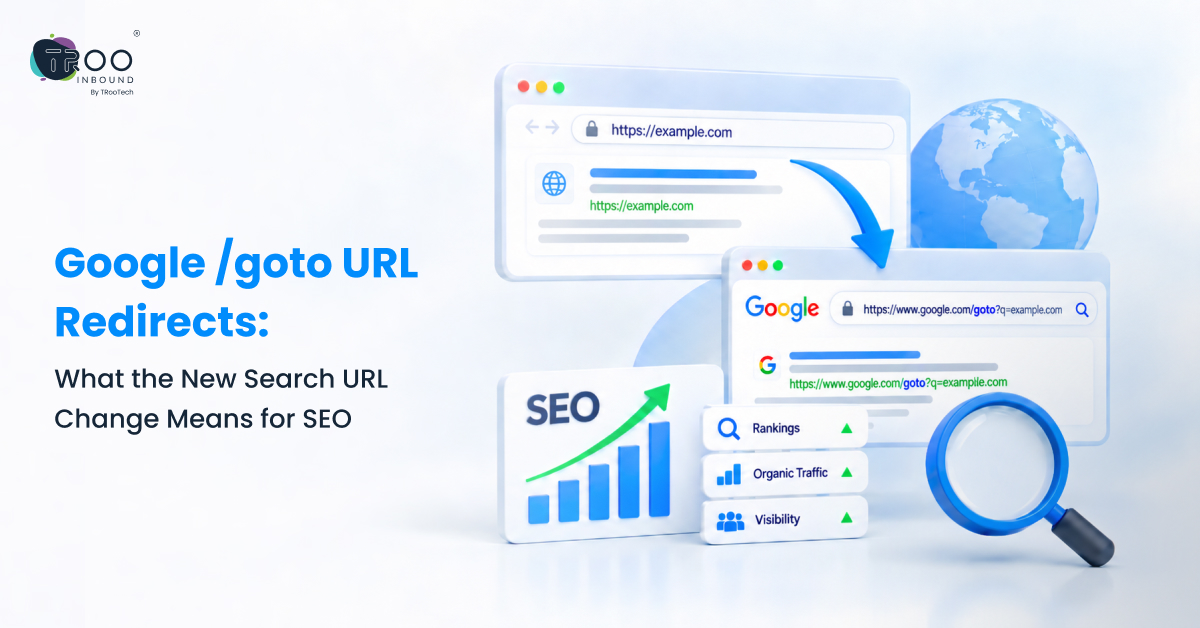
A Google /goto redirect is an intermediary URL used in a Search result before the visitor reaches the final website. Instead of a result sending the browser directly to the destination URL, Google can route the click through a URL structured around google.com/goto?url=[hashURL]. Google then resolves the link and redirects the visitor to the intended page.
The change can be summarized simply:
Before: Google Search → Destination website
Now: Google Search → Google /goto → Destination website
The important distinction is that the /goto URL belongs to Google Search. It does not replace the website URL. Your existing pages, internal links, redirects, and URL structure remain unchanged.
For a normal searcher, the result still does what it is supposed to do: take the visitor to the selected webpage. The technical difference becomes more important when software needs to process Search results at scale.
How Does the Google /goto URL Redirect Change the Search Journey?

Knowing the full user journey helps separate what changes for a person clicking a Search result from what may change for an automated SEO or data collection system.
Step 1: A user enters a search query
A person searches Google for a product, service, company, answer, or other information.
Step 2: Google displays the Search results
Google shows the user the result title, snippet, and destination URL.
Step 3: The user clicks a Search result
Instead of going directly to the destination, the click may first pass through a Google /goto URL.
Step 4: Google processes the redirect
The /goto URL contains an encoded value that identifies the destination. Google handles this intermediate step before sending the visitor to the requested website.
Step 5: The browser is redirected to the destination
The visitor is sent to the actual webpage they selected. In most cases, the additional redirect should not be noticeable to the user.
Step 6: The website receives the visitor
The visitor still reaches the business’s existing webpage. Websites do not need to create or maintain a separate /goto page.
Then the question arises:
Why has Google introduced /goto redirects?
Google introduced /goto redirects as a technical measure to address evolving forms of abuse like third-party scrapers, automated data collection bots, and AI training pipelines, and to protect its services and users.
The additional redirect step may also make it more difficult for third-party systems to process Google Search results at scale, potentially affecting rank trackers, SERP monitoring platforms, SEO data providers, and automated scraping systems.
However, Google has not confirmed that /goto was specifically introduced to target SEO companies, AI platforms, or any particular type of third party. Those are possible implications of the technical change, not Google’s stated reason.
Do Google /goto Redirects Affect SEO Rankings?
No sources have confirmed that /goto is a new SEO ranking update. The change does not alter how Google evaluates or ranks webpages. Instead, it is a technical change to what happens when a user clicks on a Search result.
This distinction is important because changes in how Search results are measured or processed can sometimes be mistaken for changes in search visibility, leading to confusion for SEO teams. A third-party platform may change how it displays a Search result URL or interprets the result, but that does not necessarily mean Google has lowered the page’s ranking.
For businesses, the best approach is to compare actual performance data before concluding that visibility has changed. Stronger evidence of a real change would include shifts in Search Console clicks and impressions, organic website traffic, landing page activity, and conversions, rather than relying on a technical anomaly reported by a third-party tool.
Do Google /goto Redirects Change Website URLs?
No. Google is not changing the URLs of websites that appear in Search. The /goto layer is part of Google’s Search experience and sits between the Search result and the destination website.
Your page URLs, internal links, and site structure remain unchanged. Website owners therefore do not need to create or optimize for /goto URLs.
Instead, businesses should continue focusing on LLM SEO best practices, including crawlability, indexability, logical site architecture, useful content, internal linking, and a strong user experience.
What Impact Could /goto URL Have on SEO Tools and Rank Tracking?
Google /goto redirects could make it more technically difficult for SEO tools and rank tracking platforms like Semrush, Ahrefs, etc., to identify and process Google Search result URLs at scale. Instead of accessing the destination URL directly, some systems may need to follow an additional Google redirect to determine where the Search result leads.
This is more significant for platforms that process thousands or millions of Search results across different queries, locations, devices, languages, and Search features. While following one redirect is relatively simple, handling an additional step across large volumes of Search data can increase processing complexity.
As a result, some SEO platforms may need to update how they extract URLs, collect Search result data, or report rankings. This could lead to temporary inconsistencies or changes in how certain tools display and interpret Search results. The actual impact will depend on how each platform collects and processes Google Search data.
For SEO teams, the key takeaway is that a change in a rank tracking tool does not automatically mean a change in Google rankings. If a dashboard shows unusual ranking fluctuations after the /goto rollout, check for platform updates and compare the data with Google Search Console and other reliable sources before treating it as a genuine visibility loss.
Does /goto URL Affect Google Search Console?
There is currently no evidence that the /goto rollout has affected Google Search Console performance reporting, although Google has not officially confirmed that Search Console is unaffected. This differs from third-party rank tracking tools because Search Console gets its Search performance data directly from Google.
This distinction matters because third-party platforms may need to adjust how they collect and interpret Search results, while Search Console provides first-party data from Google.
If a third-party SEO platform shows an unusual change in rankings or Search visibility, businesses should compare it with Search Console before concluding that their actual performance has changed. For SEO teams, Search Console should be a primary reference when investigating unexpected changes.
Review clicks and impressions alongside GA4 traffic, landing page performance, and conversions to determine whether there is a genuine change in performance. However, avoid claiming that /goto will never affect Search Console reporting unless Google provides direct confirmation.
Does Google /goto URL Affect Analytics or Organic Traffic?
For most businesses, website analytics should continue to work normally because users still arrive at the same destination page. The /goto step occurs within Google’s Search experience and does not change the final webpage that the visitor reaches.
However, businesses should continue monitoring organic traffic in GA4 alongside Search Console impressions and clicks. This becomes particularly important when third-party SEO platforms show unexpected changes.
If Search Console performance remains stable while a third-party platform reports a significant drop, the difference may reflect how the platform is collecting or processing Search data rather than an actual decline in rankings.
The best approach is to measure the complete user journey, from Search visibility and clicks to website traffic, landing page engagement, and conversions. Looking at these signals together provides a more reliable picture of SEO performance than relying on a single rank tracking dashboard.
For businesses, this also highlights why search performance should be measured beyond rankings alone. TRooInbound helps businesses improve their GTM and GA4 conversion tracking so they can connect organic traffic with meaningful actions such as form submissions, qualified leads, and other conversion events. This provides a clearer view of whether changes in search visibility are actually affecting business outcomes.
Could Google /goto URL Affect AI Platforms?
Possibly, but this should be described as a potential technical implication rather than a confirmed purpose of the change.
AI companies and search products often need access to fresh information from the web. Google Search can be one source of that information. If some Search result URLs are routed through /goto, systems that process large volumes of Google Search results may face an additional technical step when identifying or retrieving destination URLs.
However, this does not mean that websites will become inaccessible to AI platforms. AI products can use multiple search providers, web indexes, partnerships, and other retrieval methods to access online information. The more accurate takeaway is that processing Google Search results at scale could become technically more challenging for some automated systems.
Businesses should also avoid describing /goto as a confirmed AI-focused update. Google’s public explanation is that the measure is intended to address evolving forms of abuse and protect its services and users. Any discussion of its potential effect on AI data collection should therefore be presented as a possible technical consequence, not as Google’s stated objective.
What Should Businesses Do About Google /goto URL Redirects?

For most businesses, very little needs to change. The best approach is to monitor the data, understand how third-party tools are responding to the change, and avoid modifying your website to accommodate a technical change within Google’s Search experience.
1. Keep Your Existing URLs
Continue using your current page URLs and URL structure. Do not create /goto versions of your pages or change your website’s URL structure because of the rollout.
2. Monitor Google Search Console
Track clicks and impressions for important pages and search queries. Since Search Console provides first-party search performance data, it should remain an important benchmark when evaluating unexpected changes.
3. Monitor Organic Traffic
Review organic sessions, landing page performance, and other relevant metrics in GA4. This helps determine whether an apparent change in Search visibility is translating into an actual change in website traffic.
4. Review Third-Party SEO Reports
If your rank tracking or SEO platform suddenly reports changes in rankings, URLs, or SERP data, check whether the provider has acknowledged the /goto rollout or made changes to its data collection methods.
5. Compare Multiple Data Sources
Do not treat an unusual change in one SEO dashboard as proof of an algorithmic ranking change. Compare third-party reports with Search Console, GA4, and other reliable data sources before taking action.
6. Continue Following SEO Fundamentals
The /goto rollout does not change the fundamentals of SEO. Continue focusing on search intent, technical website health, useful content, authority, internal linking, crawlability, indexability, and user experience.
If your team needs additional expertise to monitor performance, investigate visibility changes, or strengthen its broader search strategy, you can hire SEO experts for ongoing SEO support.
What Does Google /goto URL Mean for the Future of SEO?
For the future of SEO, /goto is more significant for how Google Search data is accessed and processed than for how websites are optimized or ranked. SEO platforms, businesses analyzing competitors, rank tracking providers, and automated systems all depend on Search result information to varying degrees, so changes to how that information can be accessed may affect these systems.
By introducing an additional technical step between Search results and destination URLs, Google is adding another layer that systems processing Search data at scale may need to handle.
As per reports, this does not necessarily prevent third-party collection of SERP data because providers can adapt their systems, but it does introduce an additional technical challenge.
For businesses, the broader lesson is to measure SEO performance based on business outcomes rather than relying solely on the output of individual tools. Rankings remain useful, but they should be evaluated alongside impressions, clicks, organic sessions, qualified leads, and conversions.
This broader measurement framework helps SEO teams distinguish between a genuine change in search performance and a technical change in how Search data is collected, processed, or reported.
As Google’s Search infrastructure continues to evolve, businesses that rely on multiple sources of performance data will be better positioned to understand what has actually changed and what has simply changed in the way the data is presented.
Key Takeaways
Google /goto redirects alter the way some Search result clicks are handled technically, but don’t affect the structure of the URL of the sites being linked to. The searcher’s experience is pretty much the same: search, click, redirect, and go to the desired page.
The more noticeable effects will be on systems serving high volumes of Google Search results. Some rank trackers, SERP monitoring tools, data providers, scrapers, and other automated tools might have to adjust to the extra redirect.
Businesses should not worry and should not make special changes to their websites. Track Search Console, GA4, third-party SEO reports, and landing page performance. If a tool identifies any unexpected changes, investigate the measurement process before concluding that rankings have changed.
To put it simply, /goto isn’t a new SEO demand; it’s a change to Google’s Search infrastructure. The most successful businesses will be those that continue to measure real search and real business results, and give their SEO technology vendors the freedom to evolve.
FAQs
Read Popular Questions
What are Google /goto URL redirects?
They are Google-owned intermediary URLs that can route a Search result click through Google before redirecting the visitor to the destination website.
Do Google /goto redirects affect SEO rankings?
The reviewed sources provide no evidence that /goto is a ranking factor or ranking update. It changes click routing rather than an announced ranking system.
Do I need to change my website URLs because of /goto?
No. The change occurs within Google Search. Your existing URLs, internal links, and site structure remain unchanged.
Could Google /goto URL affect rank tracking tools?
Yes, potentially. Tools that process large volumes of Google Search results may need to adapt how they identify and resolve destination URLs.
Will users still reach the same website from Google Search?
Yes. The click can pass through the Google /goto URL before the visitor reaches the intended destination page.
What should businesses do now?
Keep the existing website structure, monitor Search Console and analytics, and check with SEO tool providers if unusual reporting changes appear.