
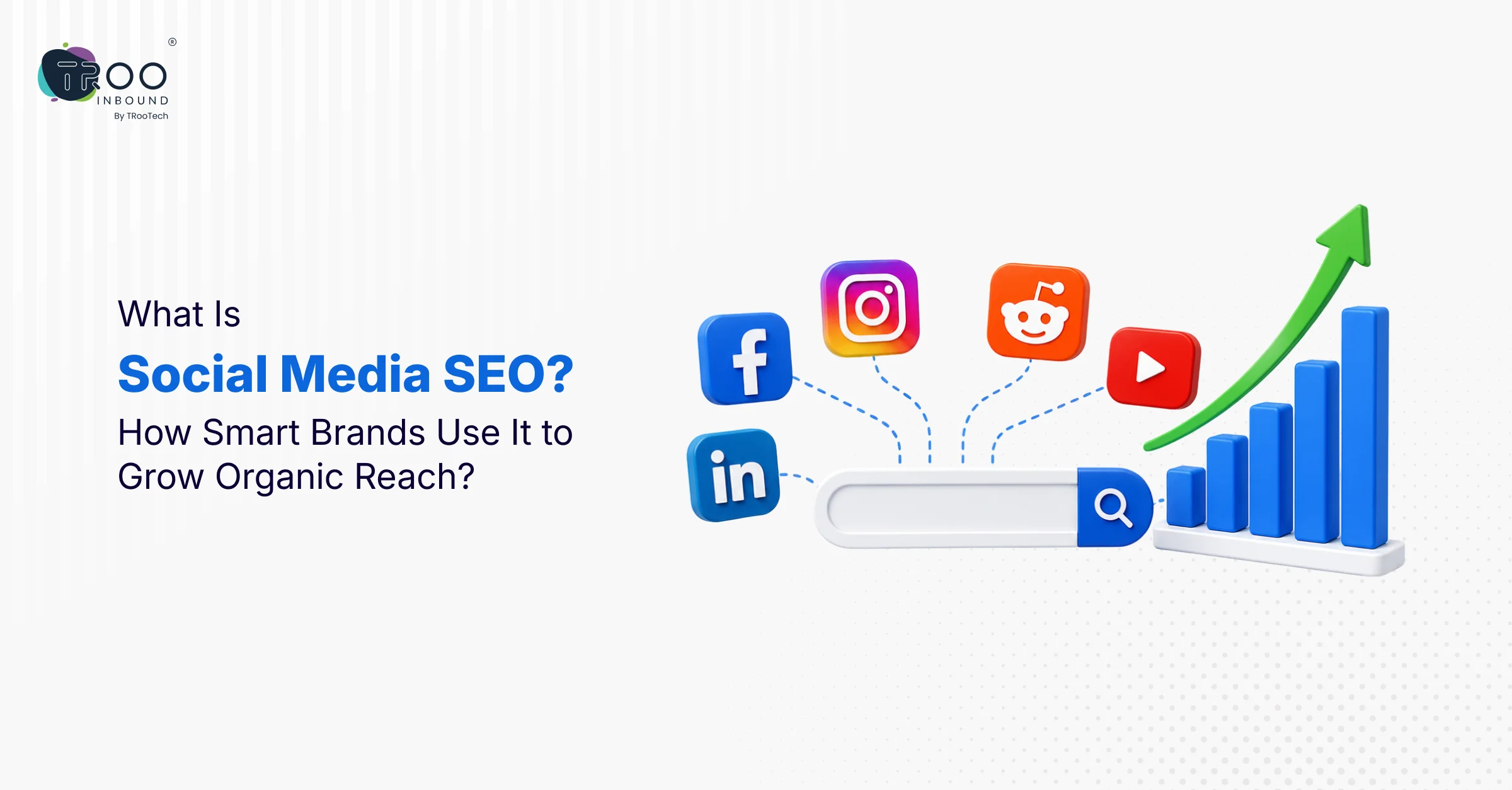


Social media SEO, also called Social SEO, is the practice of optimizing your social media profiles, posts, and videos so they rank higher in platform-specific searches (like on LinkedIn, Instagram, Facebook, YouTube, etc) and surface more easily in Google search and AI-generated answers.
Yet many marketing teams treat SEO and social media as two separate operations. But that separation is quietly costing brands organic reach. In reality, SEO and social media feed each other and bring in the organic traffic that fuels your business growth.
Recent research supports this shift. According to Semrush’s AI visibility study, social media platforms play a distinctive role in your brand’s presence on LLMs. This backs the fact that social media SEO was, is, and will be an important part of marketing strategy.
In this blog, we will explore in depth what social media SEO means, clarify what it does and does not do for your rankings, and show how smart brands are using both together to grow organic reach without doubling their budget or their workload.
What Is Social Media SEO? (Full Rundown)

Social media SEO / social SEO / social media optimization (SMO) is a practice that focuses on making your social content easier to discover on AI platforms and beyond by optimizing your brand’s social media presence in strategic ways, such as:
- Optimizing social profiles with relevant keywords, clear descriptions, and consistent branding so they appear in both platform search and Google results
- Writing social content with search intent in mind, not just engagement bait
- Using keyword research to inform the topics you cover on social, not just in your blog
- Building a content distribution system where SEO-optimized articles get amplified on social, which in turn drives backlinks and traffic back to your site
- Treating platform-native search (LinkedIn, YouTube, Pinterest, TikTok) as a secondary search engine alongside Google
This improves the chances of appearing in search engine results and AI-generated answers.
Moreover, as the search behavior continues to evolve, social platforms are becoming search engines on their own. Consumers are searching for services, products, and reviews directly within social apps. This shift has also made social media SEO an important part of modern organic growth strategies.
How Does Social Media SEO Work?
Social media SEO works by helping platform algorithms understand, categorize, and recommend your content to the right audience.
When users search for information on LinkedIn, Instagram, YouTube, Facebook, or other social networks, these platforms analyze various signals to determine which profiles, posts, and videos are most relevant to the search query.
The trust signals include:
- Engagement signals: Likes, comments, shares, saves, watch time, and other interactions help platforms determine whether users find your content valuable.
- Profile optimization: A complete profile with a clear description of your expertise, industry, products, or services gives platforms additional context about your brand. This increases the likelihood of your profile appearing when users search for relevant topics.
- Hashtags: While hashtags are not as powerful as they once were on every platform, they still provide useful context when used strategically and in moderation.
- Video content: Many platforms can now analyze video titles, descriptions, captions, and even spoken dialogue. This means a well-optimized video can rank for relevant searches even if users never see the written caption.
Though former Google webspam expert Matt Cutts has publicly clarified that social signals, the raw count of likes, shares, or followers, are not used as direct ranking signals.
However, social media activity creates a series of indirect effects that improve the organic search performance, creating a meaningful correlation between social media presence and search visibility.
5 Ways Social Media SEO Helps Grow Organic Reach

1. Content Amplification Drives Backlinks
Backlinks are a powerful ranking factor in Google’s algorithm, but the challenge is earning them organically. Social media platforms make that possible at scale.
When you publish a well-researched article and promote it strategically on social media, it reaches journalists, bloggers, researchers, and other content creators who may then link to it from their own sites. This way, your content earns backlinks through social media.
2. Social Profiles Claim Valuable SERP Real Estate
Search your own brand name on Google. Your LinkedIn company page, your Twitter/X profile, your Facebook page, your Instagram, and your YouTube channel will almost certainly appear on the first page of results alongside your website.
This is SERP real estate. Every one of those profiles that ranks is another result your brand controls, pushing competitors and potentially negative content further down the page. Brands that keep their social profiles updated, keyword-optimized, and actively maintained get this benefit automatically. Brands that neglect them leave valuable search visibility on the table.
3. Social Activity Builds Branded Search Volume
When people regularly encounter your brand on social media, they start searching for it by name on Google. This branded search volume is a trust signal. Google interprets a rising volume of branded searches as evidence that more people know and want your brand, which positively influences how your domain is perceived in search.
4. Social Media Drives Referral Traffic That Signals Relevance
When social media posts drive users to your website, that traffic carries behavioral data with it. If visitors from social media spend time reading your content, click through to other pages, and do not immediately bounce, Google registers these as positive engagement signals.
The inverse is also true. A brand that publishes clickbait on social, drives high volumes of traffic that immediately bounce, may actually hurt its search standing through those poor engagement signals. Quality matters on both ends of the funnel.
5. Faster Content Indexing
Google’s crawlers discover new content by following links. When you publish a new blog post and share it on social media, the social post creates a signal that often accelerates the indexing of the original URL. This is particularly relevant for newer domains or pages that have not yet built significant authority. Social sharing acts as a notification that new content exists and is worth crawling.
6 Social Media SEO Best Practices That Drive Results
The brands getting the most out of social media SEO are executing a handful of proven tactics with consistency and intention, such as:
1. Optimize Every Social Profile for Search
Your LinkedIn company page, Instagram bio, YT channel description, and X profile are all indexable. Treat them as a micro landing page: include your primary keywords naturally, write a clear description of what you do and who you serve, use consistent brand terminology, and keep your contact information and website URL current.
Also, pay attention to visual content. Alt text on images, video descriptions, and hashtags on platforms that support them all contribute to discoverability both within the platform and in external search.
2. Write Captions and Descriptions With Search Intent in Mind
Platform-native search is growing fast. LinkedIn, YouTube, Pinterest, and TikTok all have sophisticated internal search systems. A YouTube video with a well-optimized title and description will appear in both YouTube search and Google’s video results. A LinkedIn article with a keyword-rich introduction will surface in LinkedIn search for relevant queries.
This does not mean keyword-stuffing captions. It means writing clearly, leading with the specific value the content delivers, and using the natural language your audience searches for.
3. Build Social Content Around Platform Search Behavior
Different platforms serve different search intents. Smart brands map their content formats to these behaviors: tutorial videos on YouTube, product-adjacent guides on Pinterest, thought leadership on LinkedIn, and short-form explainer content on TikTok. Each piece of content is created with that platform’s search ecosystem in mind, not just its feed algorithm.
4. Generate Social Proof That Earns Organic Mentions
5. Create Content Around Audience Questions
People increasingly use social platforms as search engines to find answers, recommendations, and educational content. Creating posts that address common questions can improve discoverability while aligning your content with real user intent.
Question-based content also performs well in AI-powered search experiences because it mirrors how users naturally seek information.
6. Repurpose High-Performing Content Across Platforms
A valuable blog post, webinar, case study, or video can often be repurposed into multiple social content formats. Repurposing allows you to reinforce important topics, expand reach, and create more opportunities for discovery without constantly producing content from scratch. You can use HubSpot’s content remix tool for easy content repurposing.
You can hire social media experts who can help you implement these best practices according to your brand goal.
How to Improve Social Media SEO: A 5 Step Action Plan

Here is a practical starting point for integrating both channels more effectively.
Step 1: Audit Your Social Profiles for Search Optimization
Step 2: Map Your Keyword Strategy to Your Social Content Calendar
Step 3: Build a Repurposing System for Blog Content
Step 4: Use Social Listening to Feed Your Keyword Research
Step 5: Track the Right Metrics
Measuring the combined impact of social and SEO requires tracking across both channels:
- Branded search volume over time (Google Search Console GSC)
- Referral traffic from social platforms (Google Analytics GA4)
- New backlinks earned in months following content promotion pushes (Ahrefs, Semrush)
- Organic reach growth on social, not just follower count
- Platform-native search impressions were available (LinkedIn, YouTube Analytics)
Conclusion
The brands winning at organic reach in 2026 are not the ones with the biggest SEO budget or the most social media followers. They are the ones who stopped treating these two channels as separate departments and started running them as a unified growth system.
Social media does not replace SEO. SEO does not replace social media. But together, they create a loop: search brings in qualified traffic, social amplifies your content to earn backlinks and brand recognition, and that recognition drives more searches, more traffic, and more reach across both channels simultaneously.
The entry point is simpler than most teams think. Optimize your profiles. Build a repurposing workflow. Let keyword research guide your social calendar. The compounding effect does the rest.
If you want a team that can build this kind of integrated content and SEO strategy for your brand, TRooInbound works with growth-focused businesses to do exactly that. From social media marketing to SEO services and content marketing, our team operates at the intersection of all three.
Explore our Digital Marketing Services or reach out to start a conversation with our team.