
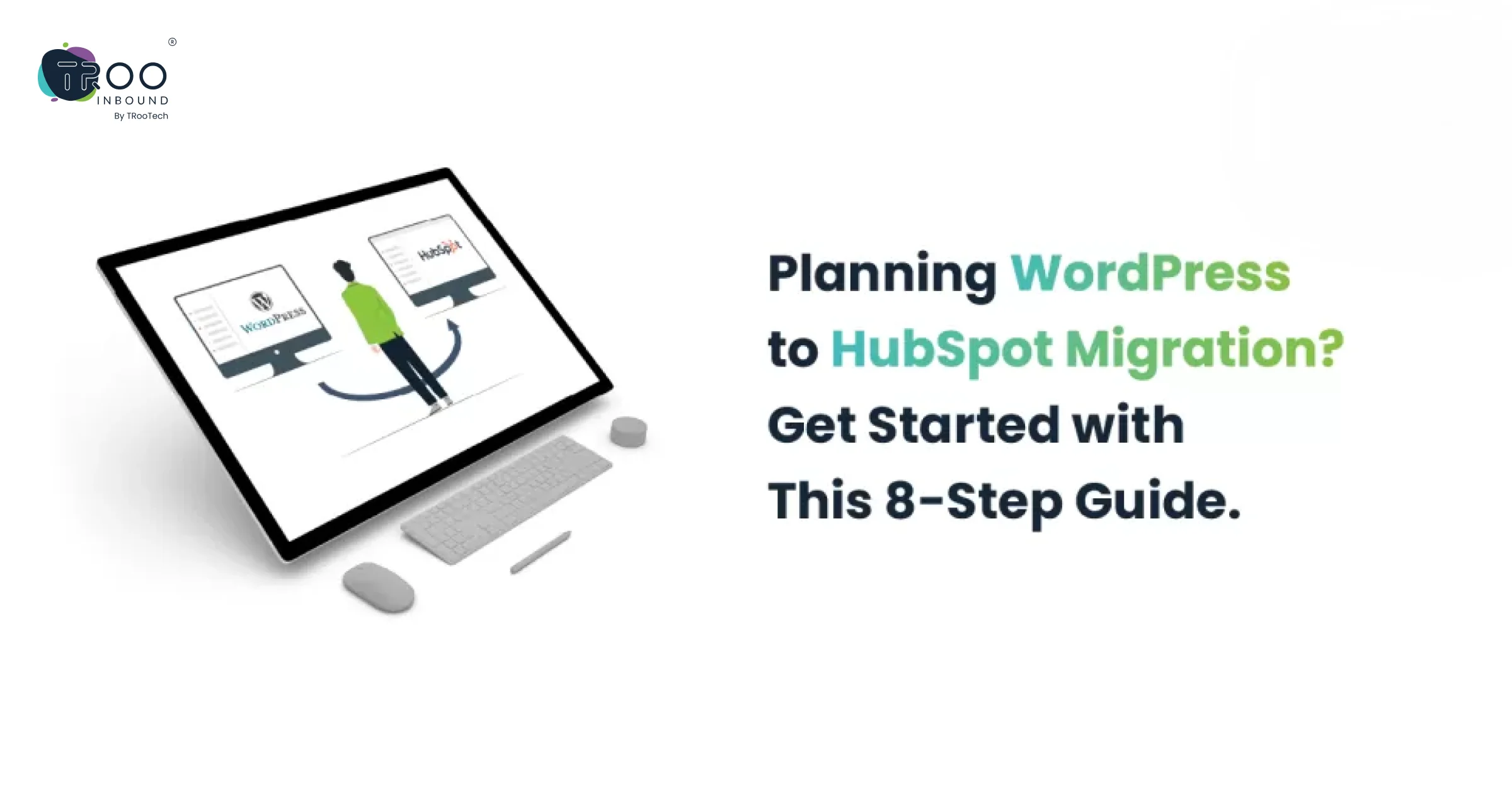


WordPress is the most dominating CMS featuring more than 43% of the websites on the internet and SERP whereas HubSpot is a popular sales and inbound marketing platform that equally hosts a significant number of websites. So, why undertake WordPress to HubSpot migration despite WordPress offering countless features, easy integrations of plugins and themes that increase the look of your website.
Lets get started by first understanding the individual characteristics of WordPress Vs HubSpot.
HubSpot
HubSpot is an all-in-one marketing, sales, and service platform that helps businesses grow by attracting, engaging, and delighting customers. Some triggering key characteristics to migrate from WordPress to HubSpot include:-
- Inbound marketing: HubSpot is built on the principle of inbound marketing, which focuses on attracting customers through relevant and valuable content, rather than interrupting them with outbound marketing tactics like cold calls or spam emails.
- CRM: HubSpot includes a CRM (customer relationship management) system that allows businesses to manage and track interactions with prospects and customers.
- Marketing Automation: HubSpot provides a range of tools for automating and streamlining marketing tasks, such as email campaigns, lead nurturing, and website personalization.
- Sales Tools: HubSpot offers sales tools such as email tracking, meeting scheduling, and email templates to streamline the sales process.
- Service and Support: HubSpot provides tools to manage and improve customer service and support, such as a help desk and ticketing system.
- Analytics: HubSpot offers a range of analytics and reporting tools to help businesses understand the performance of their marketing, sales, and service efforts.
- Integrations: Hubspot offers a wide range of integrations with other software and platforms, such as Salesforce, Slack, and Google Analytics. Explore the efficiency of your workflow by leveraging the diverse capabilities of HubSpot integration tools for seamless connectivity across your business tools.
- Customizable: HubSpot provides a wide range of customizable options for businesses to tailor the platform to their specific needs.
Migrate WordPress to HubSpot to experience the benefits this CMS to offer.

Get in touch with us for highly scalable website development.
WordPress
WordPress is an open-source content management system (CMS) that is used to create and manage websites. Some key characteristics of WordPress include:
- Customizable: WordPress is highly customizable, with a wide range of themes and plugins available to change the appearance and functionality of a website.
- User-friendly: WordPress is easy to use, even for those without technical skills, and is often used to create blogs and small business websites.
- Open-source: WordPress is open-source, meaning that it is free to use and can be modified by anyone. This has led to a large and active community of developers, who have created a wide range of themes, plugins, and other add-ons for the platform.
- SEO-friendly: WordPress is built with SEO (search engine optimization) in mind, making it easy to optimize a website for search engines.
- Blogging capabilities: WordPress is primarily used for creating and managing blogs, but it can be used to create any type of website.
- Multilingual support: WordPress supports multiple languages, which makes it easy to create a website in various languages and reach a global audience.
- Scalable: WordPress can be used for small personal blogs to large enterprise websites.
- Integrations: WordPress can integrate with a wide range of external services and platforms, such as social media, email marketing, and e-commerce platforms.

Reasons to Migrate from WordPress to HubSpot
- HubSpot’s page building capabilities authorizes you to make use of page’s layout, design and content to the optimum and craft them without coding. In addition, it also enables editing and updating.
- To build a feature-rich website you have to integrate plugins and add-ons in WordPress which can be a hassle and a speed killer during the development stage. HubSpot has all pre-built including; SEO, SSL, spam protection, caching and many more.
- To ensure safety and smooth functioning of your WordPress site, you need to keep a check on the updates of themes and plugins on regular intervals. The same doesn’t applies to HubSpot, as it already comes with secure hosting and enterprise grade features protecting your CMS from any kind of threats and freeing up your mind from keeping up with updates.
- One more encouragement to migrate WordPress to HubSpot is in-built SEO optimizer that lets you do On-page SEO without integrating any plugin and offers a bundle of SEO features including; speed, mobile-friendliness, link building, meta titles, tags and descriptions.
- An intriguing reason for WordPress to HubSpot migration is-Smart Content feature that personalizes web experience for visitors. For instance, if you have a potential buyer from another country they will be able to see the price info in their local currency. In addition, it enables delivering dynamic content, with a few required steps to setup, which is effortful in WordPress.
With this, you might have understood how beneficial WordPress to HubSpot migration is. Though, it is not over yet. HubSpot comes with an advanced conversion optimization functionality which lets you experiment the interaction of each visitor that determines which page visitors will find engaging and worth interacting. When contemplating between HubSpot or WordPress, exploring these conversion optimization features adds another layer of value to your decision-making process.
If you need well-researched and detailed insights on effectiveness of HubSpot, then our blog would be of great help. So, if the above reasons have got you thinking, then we have prepared a structured guide for WordPress to HubSpot migration that will simplify the understanding of migration process for you. If you need well-researched and detailed insights on the effectiveness of HubSpot, then our blog would be of great help. So, if the above reasons have got you thinking, then we have prepared a structured guide for WordPress to HubSpot migration that will simplify the understanding of the migration process for you. Explore our comprehensive guide on how to migrate from HubSpot to WordPress to seamlessly transition your website and make the most of your online presence.

Step by Step WordPress to HubSpot Migration
Site Audit
Site audit is an accurate analysis on how your website has performed on search engines for a particular period and the way your users have interacted with by landing on your website.
This gives you insights on the strong and weak areas of your website and helps you understand which areas of the website needs improvement that further helps in catering a better user experience.
Along with this, you will get an idea of which pages to keep and which pages to remove or redesign once you transition to HubSpot.
Luckily, there are plenty of available tools that will simplify the site auditing for you which are as follows:-
- Moz
- Ahrefs
- Google Analytics,
- Semrush
- Hotjar
- Google Webmaster Tool
Each tool has its own features and functions and is unique in its own way. However, it would be feasible to thoroughly research about each one of them and pick the most suitable one for your business.
People Also Search For:
List Down the pages You Want to Migrate
It might sound obvious that you do not want to migrate all the webpages and eliminate the non-performing ones.
To make this process smooth, shortlisting the pages in a spreadsheet or elsewhere where it is easy for you to access, would be a wise action to streamline the WordPress to HubSpot migration and make it less cumbersome.
This also help you tickmark the webpages later and maintain the progress of the work, once you migrate WordPress to HubSpot.
Pick themes or templates
Transitioning to one CMS from another without losing the look and feel of your website is challenging. However, themes and templates are here to your rescue.
Purchasing a readymade theme or hiring a HubSpot developer would be a wise choice to customize your digital presence the way you want.
Templates set the tone of your website and theme is a compilation of different templates that adds to the aesthetic appearance of your website. For a seamless migration, it is essential to consider templates for landing page and each webpage so that it performs better on search engines and delivers a better user experience compared to how your website performed earlier.
Also, you can opt free or paid themes from marketplaces. However, they might lag in catering the purpose you wish to convey through your website.
Segregate Pages by Category
Analyze your WordPress pages before you migrate from WordPress to HubSpot to sub-categorize the performing and non-perfoming ones and take the necessary action required to fix the flaws from the non-performing ones and better the performing ones.
If you eliminate the non-performing ones, then your website will cater a better scrolling and user experience resulting in more visitor count which will also favor your website in the rankings on search engine. Thus, segregating your webpages will help you make your website appear better in HubSpot CMS.
Move Your Content
This comes as no secret that content shift is a part of the WordPress to HubSpot Migration process and it includes migrating content of webpages, landing pages, blog posts and all the contents added to the website. To simplify this you can also take help of the tools available online.
In your opinion, if your content needs repurposing or keyword integration, then doing it prior to the migration is recommended.
Add Domain and Redirects
Once you are done migrating webpages and contents to the HubSpot CMS, connect your domain with it and add redirections.
To do this, go to the HubSpot portal settings, pick that option from the drop down list and follow the instructions to connect a domain button. For more detailed steps, explore our HubSpot migration checklist.
Don’t Forget Quality Testing
WordPress to HubSpot migration requires rigorous hard work and a chronological framework to transition your website smoothly.
Before availing it to the online audience, undergo a series of quality checks to ensure that no bug hampers the user experience for the visitors.
Things to keep a check on are; website loading speed, page responsiveness, URLs, meta tags, site optimization and placement of visuals.
Hence, to migrate from WordPress to HubSpot you need to undergo these steps and make your website live only when you feel content with it. However, this process may sound cumbersome, but if you let a professional web development company do it, it will get easier.
We are your perfect Digital Marketing companions